Submit News
 About us
 Advertise
 Contact us


 Aug 05, 2026
  4 min read
 Horse racing and tapeball cricket unite in new Guya...
In a landmark convergence of Guyana’s most passionate sporting cultures, horse racing and grassroots cricket have officially joined forces. The organisers of...


08 Aug 2026

In a landmark convergence of Guyana’s most passionate sporting cultures, horse racing and grassroots cricket have officially joined forces. The organisers of...

Any state initiative in the bottled water sector should be structured to strengthen, not compete with or undermine, existing private investment, the...

The family of two-year-old Larissa, who was diagnosed with West syndrome at two months old and experiences up to 100 seizures...

 Trade barriers being addressed ahead of tri-state ferry launch


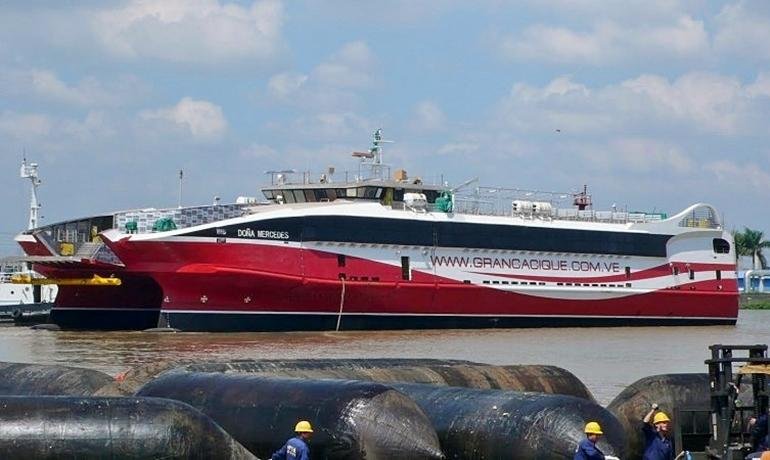
Private sector businesses eagerly await the launch of the much-anticipated tri-state ferry and are working diligently to address, in particular, trade barriers that could hinder the smooth movement of goods.
This service involves Guyana, Trinidad and Tobago, and Barbados, as the three nations formed a joint company last year to facilitate the introduction of a ferry system that will transport both passengers and cargo.
While work is still ongoing at a governmental level regarding the necessary arrangements, Private Sector Commission (PSC) Chairman, Komal Singh, stated that significant efforts are being made on the business front to ensure swift adaptation when the service is finally launched.
He told Ignite News that, for instance, there are certain non-tariff barriers within the region that will need to be addressed, as local traders would want to avoid sending goods that could be rejected by the other countries.
In this regard, Singh noted that the private sector is engaging with the relevant bodies, such as the CARICOM arm, the Council for Trade and Economic Development (COTED), where most of these trade matters are being discussed.
Singh referenced the ongoing honey issue, in which Guyana is currently unable to export honey to Trinidad, as one of the matters already under review. He added that information reaching the PSC suggests that “the Trinidad government is moving aggressively to get the matter resolved.”
Local business operators have previously lamented the ban or rejection of some Guyanese goods by Trinidad. These include poultry meat, peppers, pineapples, and honey.
President Dr Irfaan Ali highlighted last year that Parika would be developed as a standard port for the trade vessel. He stated that a key advantage of the Parika location is that goods could be moved directly from there to the region, rather than being transported first to a city port.
Prime Minister Keith Rowley informed Trinidadians last year that the ferry decision was driven by the need to transport raw materials and fresh produce from producing areas to consumption and manufacturing locations within the CARICOM sub-zone.
“The private sector will fully support the venture, as we see it as highly beneficial for the movement of goods and services in the region,” the PSC Chairman stated.
He told Ignite News that the region currently lacks a robust logistics hub to facilitate the swift transportation of specialised agricultural produce to the islands. “When this ferry becomes operational, in our view, it will add significant value to the agricultural sector and other industries by enabling the rapid movement of goods between the islands,” he said.
In addition to the tri-state ferry, the region is also working on a regional ferry that will encompass all CARICOM states. The push for these ferry services stems from CARICOM’s initiative to reduce its food import bill by 25 per cent by 2025. The free and efficient movement of goods and services is one of the key strategies regional states are pursuing to achieve this goal.