Submit News
 About us
 Advertise
 Contact us


 Aug 05, 2026
  4 min read
 Horse racing and tapeball cricket unite in new Guya...
In a landmark convergence of Guyana’s most passionate sporting cultures, horse racing and grassroots cricket have officially joined forces. The organisers of...


08 Aug 2026

In a landmark convergence of Guyana’s most passionate sporting cultures, horse racing and grassroots cricket have officially joined forces. The organisers of...

Any state initiative in the bottled water sector should be structured to strengthen, not compete with or undermine, existing private investment, the...

The family of two-year-old Larissa, who was diagnosed with West syndrome at two months old and experiences up to 100 seizures...

 Benn reminds cops: Public can record police, stop using indecent language


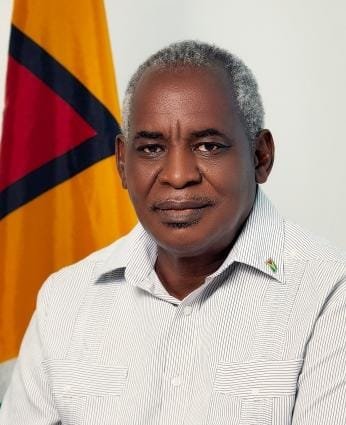
Home Affairs Minister Robeson Benn has said that members of the public have the right to record police officers while they are carrying out their duties. This, he contended, ensures transparency and provides evidence in the event of any incidents involving the police.
The minister made these remarks on Wednesday while addressing the Guyana Police Force’s (GPF) Inspectors’ and Sergeants’ Conference at the Police Officers’ Annexe, Eve Leary. His comments were in reference to a recent incident caught on camera, in which police officers were involved in a physical altercation with two men.
“I keep telling the police, I keep telling everyone: the public has a right to video and record police behaviour. They have that right. You can’t tell people they can’t film you,” Benn asserted. “If they come into my office and want to record me, they are free to do so—and I can do the same to them. We must not prevent people from taking videos, pictures, or engaging in other forms of recording.”
He also emphasised the importance of police body cameras, which are now being used to document interactions and ensure that proper procedures are followed.
Minister Benn further stressed that he does not want police officers using indecent language, whether in their homes, at police stations, or in public spaces. Additionally, he reiterated that police stations should be welcoming environments for the public.
Touching on the need for modernisation, the minister noted: “Despite challenges, we intend—when we complete the capital repositioning of the Guyana Police Force—that it will be unrecognisable compared to what we inherited. We speak of increasing peace in Guyana, and now more than ever, we need to do so to protect democratic principles and governance.”
He acknowledged that one of the biggest challenges is fostering cultural change within the force, particularly in how officers view and engage with fellow Guyanese.
The minister also underscored the importance of protecting diversity, equity, and inclusivity. He urged police ranks to continuously improve their approach to development and peacekeeping in the country.