Submit News
 About us
 Advertise
 Contact us


 Aug 05, 2026
  4 min read
 Horse racing and tapeball cricket unite in new Guya...
In a landmark convergence of Guyana’s most passionate sporting cultures, horse racing and grassroots cricket have officially joined forces. The organisers of...


08 Aug 2026

In a landmark convergence of Guyana’s most passionate sporting cultures, horse racing and grassroots cricket have officially joined forces. The organisers of...

Any state initiative in the bottled water sector should be structured to strengthen, not compete with or undermine, existing private investment, the...

The family of two-year-old Larissa, who was diagnosed with West syndrome at two months old and experiences up to 100 seizures...

 Majority of Guyanese women have access to social aid programmes


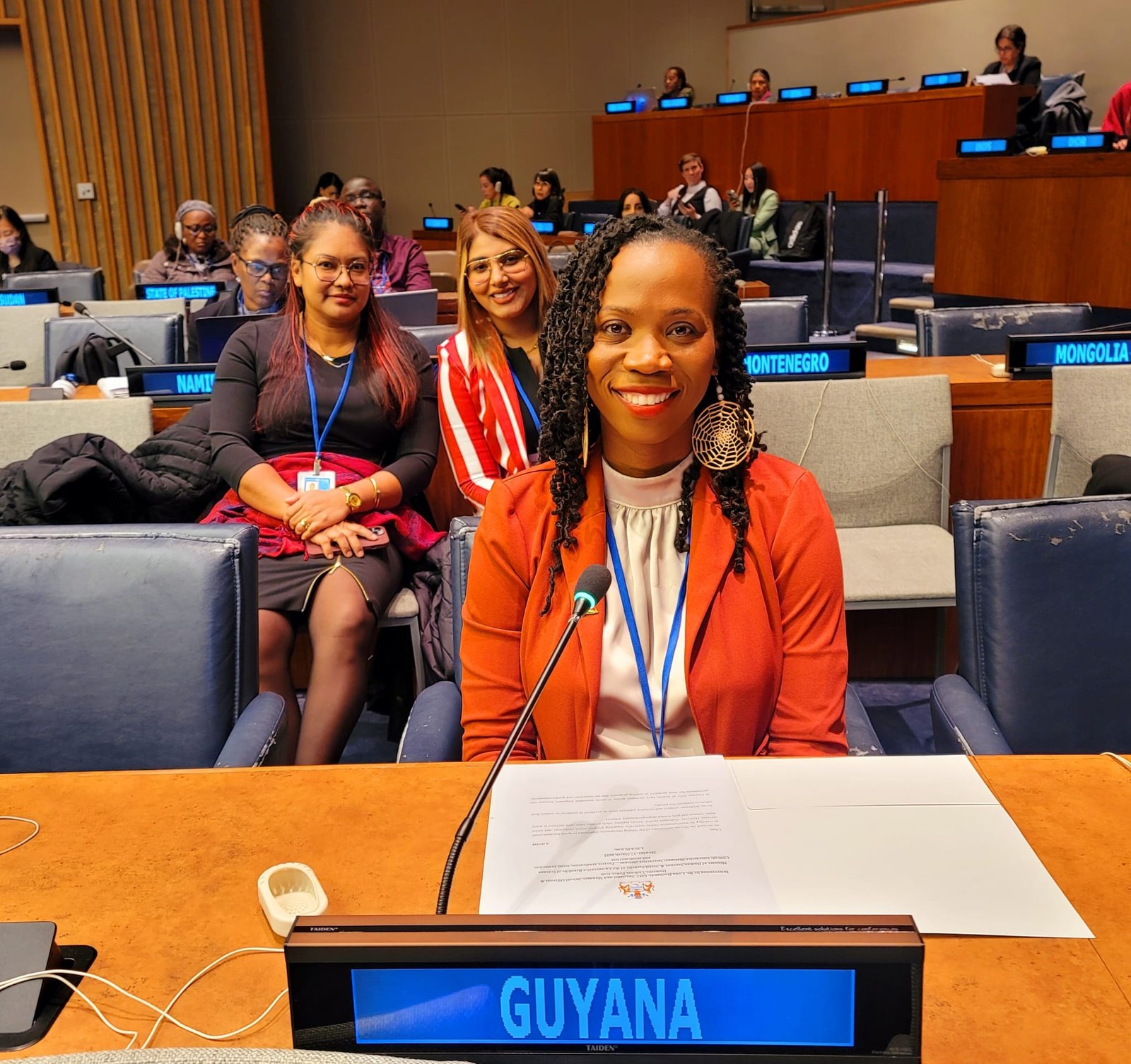
Sixty-three per cent of Guyanese women have increased access to social assistance programmes, according to Dr Cona Husbands, Manager of the Ministry of Human Services and Social Security’s Sexual Offences and Domestic Violence Policy Unit (SO&DVPU).
Dr Husbands made the disclosure during the 13th plenary meeting of the 69th session of the Commission on the Status of Women at the United Nations Headquarters on Monday.
In her address on steps taken to eradicate poverty and enhance social protection service delivery for women in Guyana, Dr Husbands stated that while many women and girls across the region are still severely affected, the Government of Guyana has taken steps to ensure that its population receives adequate support.
“Across regions, while poverty rates have declined in many areas, women and girls remain disproportionately affected. As we deliberate, creative and inclusive solutions must be prioritised for countries to sustain their efforts to eradicate this poverty. In Guyana, sixty-three per cent of women have increased access to social assistance programmes because our government has been proactive in crafting programmes that are accessible and gender-responsive, ensuring that women and girls, especially in rural areas, receive the support they need,” she noted.
She further stated that in today’s world of overlapping crises, including climate change and pandemics, social protection systems must be resilient and adaptable to meet the needs of affected women and girls.
Dr Husbands noted that during the COVID-19 pandemic, the Ministry of Human Services and Social Security quickly adapted by introducing emergency relief packages, including direct cash transfers and food assistance, to support vulnerable women and children.
She said this highlights the need for flexible social protection systems that can address shocks and ensure continuity of services, as gender-responsive programmes focus on addressing the specific needs of women and girls.
“This includes ensuring that social protection systems recognise the unpaid care work that women perform and that they provide support for women’s economic empowerment. Key stakeholders, including the UN, governments, and civil society, must work together to ensure that social protection systems are intact and well-resourced,” Dr Husbands said.
She added that in Guyana, the government partners with civil society organisations to conduct community outreaches and awareness sensitisation campaigns to ensure that women and girls are aware of their rights and social protection, as well as how to access these services.
Dr Husbands said the government has also introduced measures to streamline service delivery and ensure that women in remote areas are not excluded from critical support.
She stated that while the government’s efforts provide a strong foundation for continued progress, it must be emphasised that the sharing of global financial resources with lower and middle-income countries will lead to a more sustainable gender-responsive system that addresses both the immediate and long-term needs of women and girls.