Submit News
 About us
 Advertise
 Contact us


 Aug 05, 2026
  4 min read
 Horse racing and tapeball cricket unite in new Guya...
In a landmark convergence of Guyana’s most passionate sporting cultures, horse racing and grassroots cricket have officially joined forces. The organisers of...


08 Aug 2026

In a landmark convergence of Guyana’s most passionate sporting cultures, horse racing and grassroots cricket have officially joined forces. The organisers of...

Any state initiative in the bottled water sector should be structured to strengthen, not compete with or undermine, existing private investment, the...

The family of two-year-old Larissa, who was diagnosed with West syndrome at two months old and experiences up to 100 seizures...

 $22M One Health Project to bolster Guyana’s health emergency response


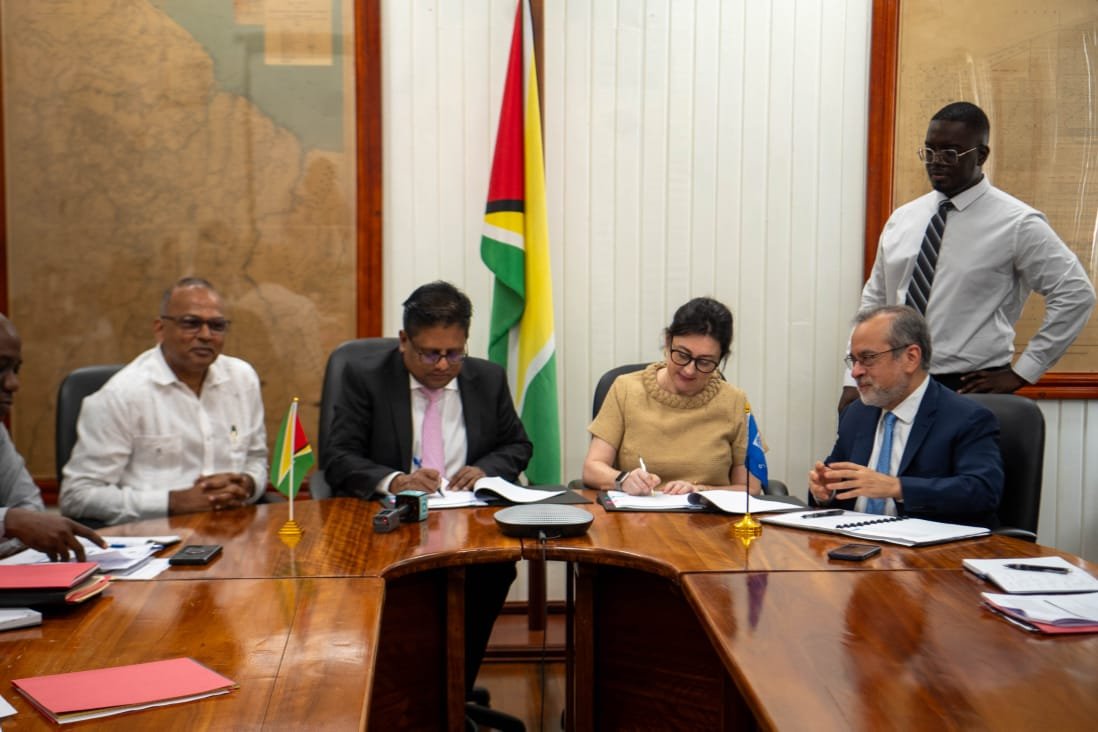
Guyana has signed a $22 million One Health Project with the World Bank to strengthen the country’s capacity to prevent, prepare for, and respond to future health emergencies, officials said.
Senior Minister in the Office of the President with Responsibility for Finance and the Public Service, Dr. Ashni Singh, signed the agreement on behalf of the government, while World Bank Resident Representative Diletta Doretti signed for the financial institution. The project includes a $7 million loan from the World Bank and a $15 million grant from the Pandemic Fund.
The initiative will focus on strengthening Guyana’s health surveillance systems, enhancing laboratory and workforce capacity, improving border security, and implementing a rapid, data-driven health surveillance system.
Speaking at the signing ceremony, Singh called the event “truly historic,” highlighting that when President Irfaan Ali’s administration took office in 2020 during the COVID-19 pandemic, the country was “woefully unprepared.” He credited the World Bank as a “very responsive partner” that helped Guyana navigate the crisis successfully.
“The Guyana example has been cited on multiple occasions, and the project checks every box,” Singh said. “For example, the project illustrates the use of World Bank/IDA resources to leverage additional resources, such as the grant now received from the Pandemic Fund. Additionally, it is a project that is fully aligned with national priorities addressing actions that emerged from the Government’s Action Plan for pandemic preparedness.”
He added that Ali’s administration is prioritizing investments in health and education to improve the lives of every Guyanese citizen.
Jaime Saavedra, the World Bank’s Director of Human Development for Latin America and the Caribbean, said the project reflects Guyana’s strong commitment to health resilience.
“This phrase of One Health puts together this interconnectedness between human, animal, and environmental health, and it reminds us that a threat to one of them eventually results in a threat to all,” Saavedra said. “I think this is strong leadership of the country to bring together public health on one hand, veterinary science on the other, and environmental management, or everything at the same time sets a very strong example.”
Health Minister Dr. Frank Anthony, who also attended the signing, emphasized the importance of pandemic preparedness and noted that Guyana has been conducting regular assessments since 2022 to identify gaps in its response system.
“Going forward, we recognized that we have to be prepared for future pandemics, and to be prepared one of the things we have been looking at is how to get to ‘readiness,’” Anthony said. “So we have been able to do an assessment, and we have been doing it regularly since 2022, so that we could examine gaps we have in our response system. We are one of the few countries, maybe the only country in the Americas that did a joint external evaluation of how we respond to pandemics, and based on those findings, we have been able to put together a plan. That plan is what we want to use these resources for to be able to fill those gaps.”
He added that Guyana successfully applied for funding from the Pandemic Fund to support these efforts.
The project is expected to enhance the country’s ability to respond to future health crises efficiently. (DPI)
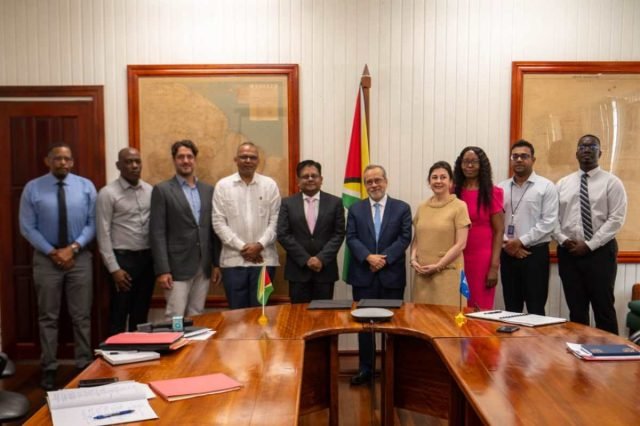
Guyana and World Bank officials at the signing of the Agreement