Submit News
 About us
 Advertise
 Contact us


 Aug 05, 2026
  4 min read
 Horse racing and tapeball cricket unite in new Guya...
In a landmark convergence of Guyana’s most passionate sporting cultures, horse racing and grassroots cricket have officially joined forces. The organisers of...


08 Aug 2026

In a landmark convergence of Guyana’s most passionate sporting cultures, horse racing and grassroots cricket have officially joined forces. The organisers of...

Any state initiative in the bottled water sector should be structured to strengthen, not compete with or undermine, existing private investment, the...

The family of two-year-old Larissa, who was diagnosed with West syndrome at two months old and experiences up to 100 seizures...

 A second chance at life through dialysis


For many individuals in Guyana, dialysis is not just a treatment – it’s a lifeline. In a country where kidney disease affects hundreds of lives, the government’s initiative to offer GY$600,000 annually to those in need has made a significant difference.
While the financial support plays a crucial role, it is the human stories behind the numbers that truly illustrate the power of this intervention.
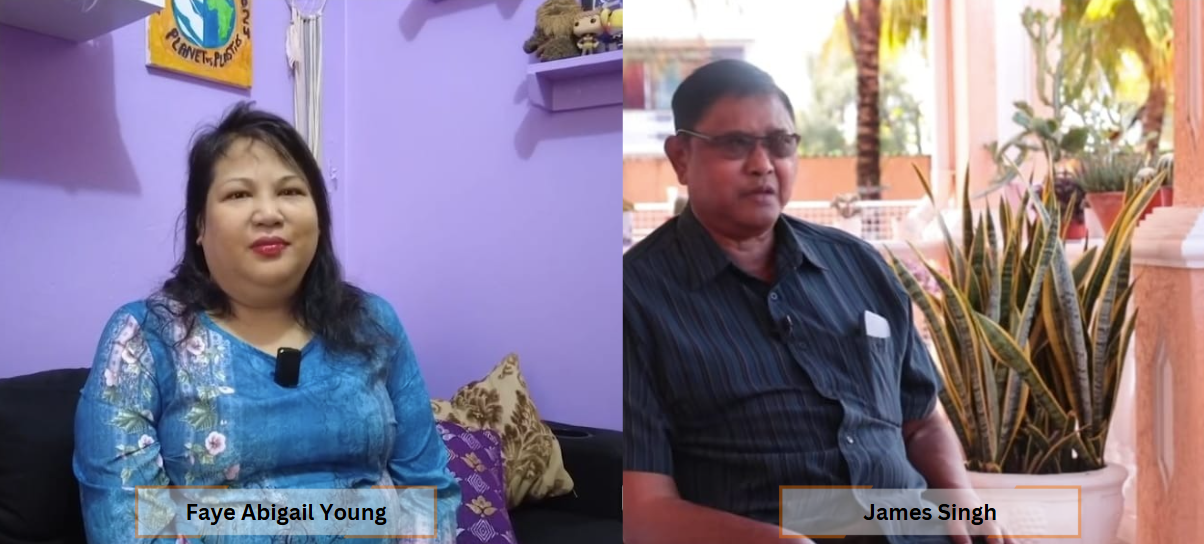
James Singh, a former Forest Commission chief, is one of the dialysis patients benefiting from this initiative. In 2010, his life changed forever when he suffered a stroke. As his health deteriorated, he was diagnosed with kidney failure in the early 2010s. Since then, dialysis has been a regular part of his life, but it has never defined him.
“I worked at the Guyana Forestry Commission, and I loved fieldwork,” he shared in a widely circulated Ministry of Health video on Facebook. “But after my kidney failure, I knew that without dialysis, I was going straight to the grave,” he added. For Singh, dialysis is more than a necessity – it’s a means to continue living a life that still holds meaning.
The dialysis process is lengthy and, for some, takes a toll on their mental health, lasting three to four hours per session. But over time, Singh has come to accept it as part of his reality.
“You have to keep trying all the time, and you have to keep a positive outlook,” he advises others who are also undergoing the treatment. Although he can no longer work as much as he once did, Singh is now a consultant, showing that even chronic illness does not have to stop someone from living fully. Singh remains thankful when he discusses the financial support provided by the government.
“Dialysis is very costly,” he shared. “But with the government’s intervention, that $600,000 represents almost a quarter of the annual cost. It’s a blessing.” He added that he is grateful for his family’s support in helping him stay strong through it all.
Faye Abigail Young, in her 40s and another patient, was once a vibrant, active woman. In her 30s, she was diagnosed with diabetes and later developed kidney failure. “When you’re young, you feel invincible, so you don’t always listen to the doctors,” she reflected in a video interview shared by the Ministry of Health.
Her life – once filled with travel, outings, and a strong sense of independence – was forever altered when kidney disease took hold. “It was hard for me to accept at first because I was such an active person,” she said. “Being on dialysis meant living on a machine. My independence was cut.”
Dialysis, a process she now undergoes three times a week for four hours each session, took away much of the freedom she once had. The uncertainty of how she would feel after each session made it impossible to plan. “Some days I would feel okay, and other days, not so much,” Young said.
Her financial concerns only added to the ongoing stress. “In my first year of dialysis, I couldn’t stop thinking about how difficult it was to pay for,” she shared. “I wasn’t just thinking about myself – I was thinking about the people I met at the hospital. Some could only afford to do dialysis once a week, and that’s dangerous. They needed more sessions, but they just couldn’t manage the cost.”
Then came the announcement that the government would allocate GY$600,000 to dialysis patients – a sum that would make a world of difference to those struggling to afford the treatment.
“When I saw that in the budget, I was overjoyed. Not just for me, but for everyone else who was struggling,” she said. “It means that dialysis is now within reach for many more people, and that’s a huge relief.”
Young’s mental health has improved significantly since the announcement. She credits the support of fellow dialysis patients, who she says helped her navigate the emotional toll of her journey. “I didn’t even realise how many people out there were willing to help,” she reflected. “It’s been a long road, but now I feel much stronger.”
For James Singh and Faye Abigail Young, dialysis is more than a medical procedure – it’s a lifeline. The emotional and financial challenges of living with kidney disease are immense, but these two individuals continue to demonstrate the strength and resilience of those who refuse to let illness define their lives. With government support and the unwavering love of family and community, they are proof that even in the face of chronic illness, there is always hope for a better tomorrow.