Submit News
 About us
 Advertise
 Contact us


 Aug 05, 2026
  4 min read
 Horse racing and tapeball cricket unite in new Guya...
In a landmark convergence of Guyana’s most passionate sporting cultures, horse racing and grassroots cricket have officially joined forces. The organisers of...


09 Aug 2026

In a landmark convergence of Guyana’s most passionate sporting cultures, horse racing and grassroots cricket have officially joined forces. The organisers of...

Any state initiative in the bottled water sector should be structured to strengthen, not compete with or undermine, existing private investment, the...

The family of two-year-old Larissa, who was diagnosed with West syndrome at two months old and experiences up to 100 seizures...

 Demerara River Bridge on track for August completion


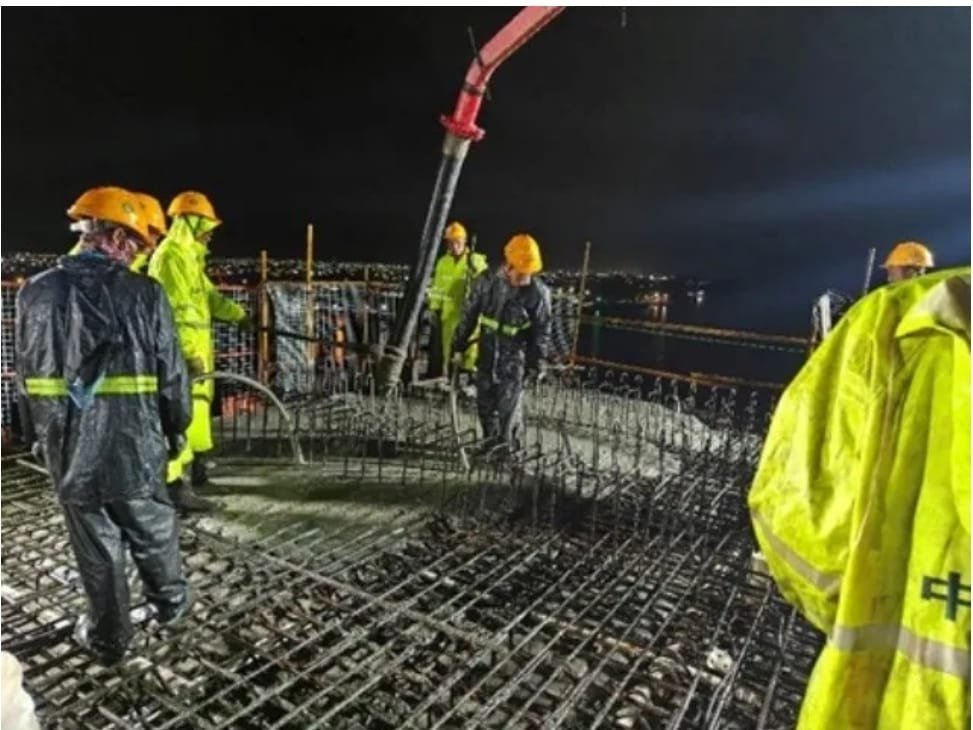
Traffic woes and the daily rush to beat the Demerara Harbour Bridge’s closure will soon be a thing of the past for residents of Region Three, as the new river bridge is on course for completion in August.
According to a weekly progress report presented by the Ministry of Public Works, the physical development of the bridge structure currently stands at 76.91 per cent.
This milestone is being driven by the efforts of 1,383 workers employed on the US$260 million landmark infrastructure project, which aims to deliver timely relief to commuters. Of this number, 116 are Guyanese, employed by the contractor, China Railway Construction (International) Limited.
Works executed on the 2.8-kilometre bridge to date include the driving of piles for the two main towers to a depth of 120 metres, with each pile cast from 500 cubic metres of concrete. This phase is nearing completion, with 98 per cent of the pile caps installed.
The installation of pile caps is critical, as they sustain the full overlying weight of the superstructure and facilitate the transfer of the load to the piles beneath.
Additionally, 94 per cent of the pier columns have been installed to provide extra support, while 93 per cent of the tie beams have been placed to connect the pier columns.
To further fortify the structure, bent caps are also being installed, with 91 per cent already in place. Bent caps serve as intermediate supports between bridge spans, transferring and resisting vertical and lateral loads—such as those caused by earthquakes and wind—from the superstructure to the foundation.
Some 85 per cent of the precast girders have been fabricated, and 73 per cent installed. With these works steadily advancing, there have been no incidents or accidents on either the East Bank or West Bank during the reporting week.
Once complete, the bridge will connect Regions Three and Four, significantly improving economic activity. The toll-free crossing will accommodate vehicles of all sizes, with a speed limit of 80 km/h.
Designed to last at least 100 years, the bridge will also feature the Cacique Crown of Honour (CCH)—Guyana’s second-highest national award—as part of its design. (DPI)