Submit News
 About us
 Advertise
 Contact us


 Aug 05, 2026
  4 min read
 Horse racing and tapeball cricket unite in new Guya...
In a landmark convergence of Guyana’s most passionate sporting cultures, horse racing and grassroots cricket have officially joined forces. The organisers of...


09 Aug 2026

In a landmark convergence of Guyana’s most passionate sporting cultures, horse racing and grassroots cricket have officially joined forces. The organisers of...

Any state initiative in the bottled water sector should be structured to strengthen, not compete with or undermine, existing private investment, the...

The family of two-year-old Larissa, who was diagnosed with West syndrome at two months old and experiences up to 100 seizures...

 House approves landmark oil spill bill


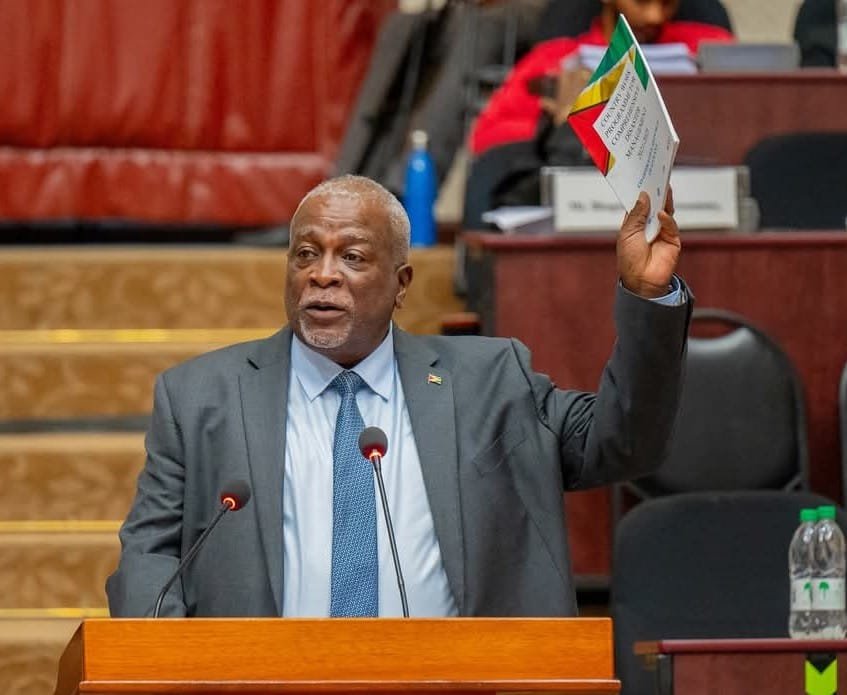
Guyana’s National Assembly on Friday passed the Oil Pollution Prevention, Preparedness, Response and Responsibility Bill 2025, a landmark piece of legislation aimed at regulating oil extraction and enhancing national preparedness for potential oil spills.
Championing the new bill, Prime Minister Brigadier (Ret’d) Mark Phillips said the legislation is vital for protecting Guyana’s economy and aligns with international best practices.
“Guyana, standing at the threshold as a major oil-producing nation, must take pattern from these models by establishing a clear authority for oversight, aligning with best global practices, and ensuring all operators bear full responsibility for environmental protection,” the prime minister said.
Phillips, who also holds responsibility for disaster preparedness, underscored the need to build institutional capacity to avoid the enforcement and response pitfalls seen in other countries.
“I should note that while we have drawn lessons from global best practices, it is important to recognise that even these countries… have faced challenges in enforcement and real-time response… with the passage of this bill, Guyana is committed to building the necessary institutional capacity,” he said.
Natural Resources Minister Vickram Bharrat, also voiced support for the bill, touting the government’s track record in managing the oil sector and recent procurement of the country’s first capping stack for spill response.
“We have a bill here that will ensure that the responsible party is mandated to ensure that they prevent, that they prepare, that they restore, [and]…that they ensure that we return to a state of normalcy,” Bharrat said.
Attorney General and Minister of Legal Affairs Mohabir Anil Nandlall, concluded the government’s presentations, highlighting the legislation’s emphasis on safety, environmental protection, and a statutory framework for disaster preparedness and compensation.
“… In respect of disasters which we have already settled. The absence of a disaster preparedness apparatus, a legal standard by which operators have developed, inadequate insurance against some disasters, and the mechanism of compensation in the event of a disaster. I am pleased to announce that these very valid and crucial concerns are addressed in this bill,” he said.
The bill designates the Civil Defence Commission (CDC) as the lead authority for oil spill response and outlines the formation of a National Oil Spill Committee. This body will develop an Incident Command System and spearhead regular training and drills to maintain national readiness.
The new law aligns with Guyana’s Low Carbon Development Strategy and is part of the government’s wider effort to modernise the petroleum sector and secure long-term benefits for all citizens.