Submit News
 About us
 Advertise
 Contact us


 Aug 05, 2026
  4 min read
 Horse racing and tapeball cricket unite in new Guya...
In a landmark convergence of Guyana’s most passionate sporting cultures, horse racing and grassroots cricket have officially joined forces. The organisers of...


09 Aug 2026

In a landmark convergence of Guyana’s most passionate sporting cultures, horse racing and grassroots cricket have officially joined forces. The organisers of...

Any state initiative in the bottled water sector should be structured to strengthen, not compete with or undermine, existing private investment, the...

The family of two-year-old Larissa, who was diagnosed with West syndrome at two months old and experiences up to 100 seizures...

 Prime Minister announces $885M solar investment for Amerindian villages


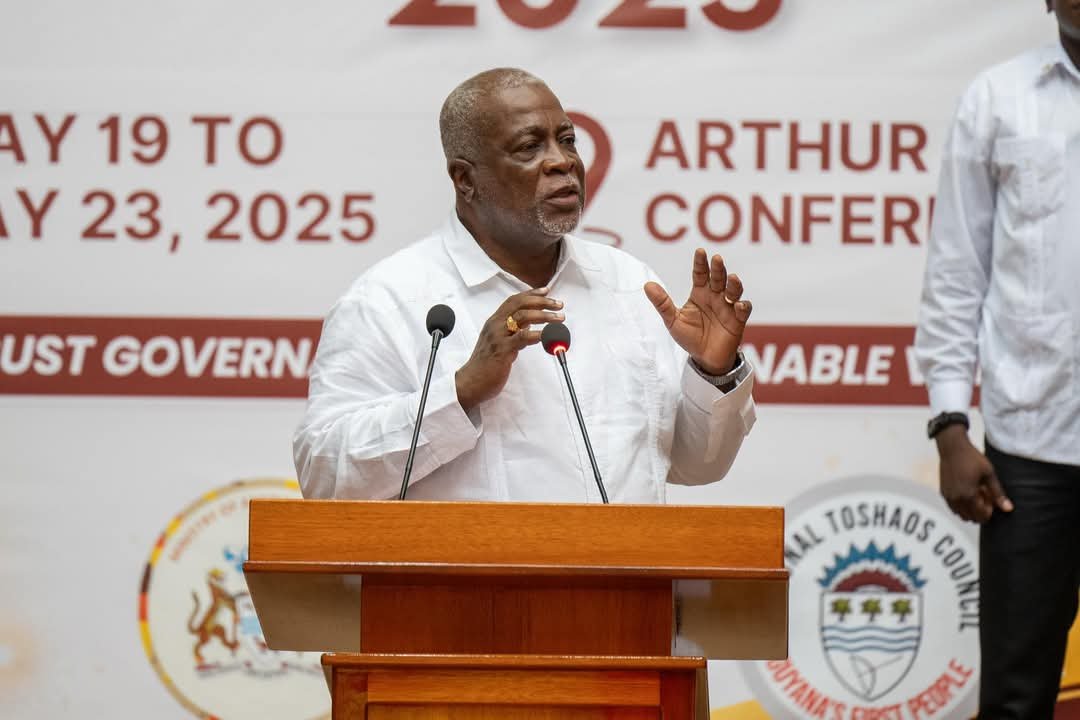
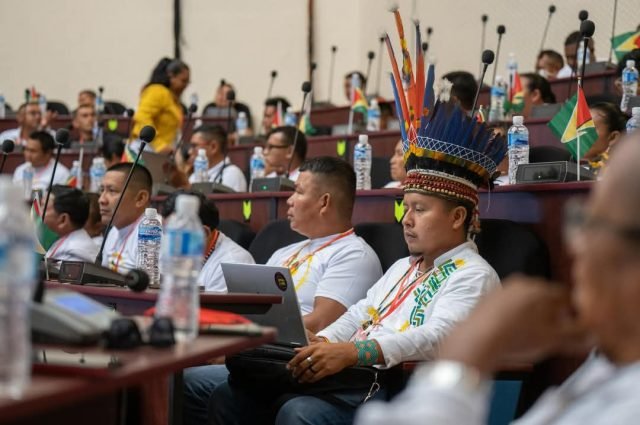
Prime Minister Brigadier (Ret’d) Mark Phillips today announced an $885 million government investment to retrofit solar photovoltaic systems in 21 Amerindian villages across five regions, as part of a broader push to expand clean energy access in remote areas.
The initiative targets Regions One, Two, Four, Seven, and Nine, and is expected to benefit roughly 12,700 residents. It was approved by Cabinet and forms part of the administration’s agenda to promote sustainable and inclusive development in hinterland and riverine communities.
Speaking on the second day of the National Toshaos Council (NTC) Conference at the Arthur Chung Conference Centre, Prime Minister Phillips reaffirmed the government’s commitment to bridging both the energy and digital divides.
“I’m using Region Nine as an example to show that we are serious about development in your communities. You are connected to the rest of Guyana through ICT; you are connected to the world, to the future. That is how we improve the delivery of medical services and education. Because you are now connected, you could access universities and colleges throughout the world,” he said.
Pointing to Upper Takutu-Upper Essequibo (Region Nine), the Prime Minister noted the region’s current installed generation capacity of 5.2 megawatts, comprising fossil fuel, solar, and hydropower. Only two megawatts are presently utilised, he said, indicating untapped potential for agro-processing and micro-enterprise development, particularly in mango and cashew industries.
Also today, the Heads of the Guyana Energy Agency (GEA), the National Data Management Authority (NDMA), and the ICT Access for Hinterland Poor and Remote Communities (HPRC) Project Management Unit presented updates on projects aimed at improving energy access, digital infrastructure, and innovation.
According to the GEA, 37,230 solar home systems have been procured over the past five years for hinterland households. Additionally, 55 solar mini-grids are providing over 2.15 megawatts of power to schools, health posts, and public offices. Projects include a 1.5 MW solar farm in Bartica (Region Seven), a 0.65 MW facility in Mahdia (Region Eight), and a 1 MW plant in Lethem (Region Nine). Hydropower projects at Moco Moco and Kumu are also supplying Region Nine.
The NDMA reported that 228 of 253 targeted hinterland and Amerindian communities have been connected to high-speed internet under the 2024 rollout, benefiting more than 129,000 people. The remaining 25 are expected to be connected by August 2025 using solar-powered solutions.
Digital literacy efforts are also expanding. More than 1,900 residents across 70 communities have completed cybersecurity and digital training, while the “Girls in ICT” initiative has reached Region Nine communities such as St Ignatius and Aishalton.
The HPRC Project Management Unit said 140 ICT hubs have been built, with 10 undergoing equipment upgrades and 30 still under construction. A total of 200 hubs are planned. Facilities are being equipped with laptops, printers, smart TVs, and solar power.
To maintain operations, 192 ICT hub managers and 32 technicians have been trained, while 1,518 community members have completed basic ICT courses. The programme aims to train 4,000 beneficiaries nationwide.
Under the grant component of the HPRC project, 180 Amerindian Village and Community Development Councils have each received up to USD $40,000 to establish and operate hubs, aimed at creating jobs and boosting local economies.
The combined energy and digital initiatives are helping to lay the foundation for a resilient and inclusive hinterland economy.