Submit News
 About us
 Advertise
 Contact us


 Aug 05, 2026
  4 min read
 Horse racing and tapeball cricket unite in new Guya...
In a landmark convergence of Guyana’s most passionate sporting cultures, horse racing and grassroots cricket have officially joined forces. The organisers of...


08 Aug 2026

In a landmark convergence of Guyana’s most passionate sporting cultures, horse racing and grassroots cricket have officially joined forces. The organisers of...

Any state initiative in the bottled water sector should be structured to strengthen, not compete with or undermine, existing private investment, the...

The family of two-year-old Larissa, who was diagnosed with West syndrome at two months old and experiences up to 100 seizures...

 Children’s Court opens in Charity


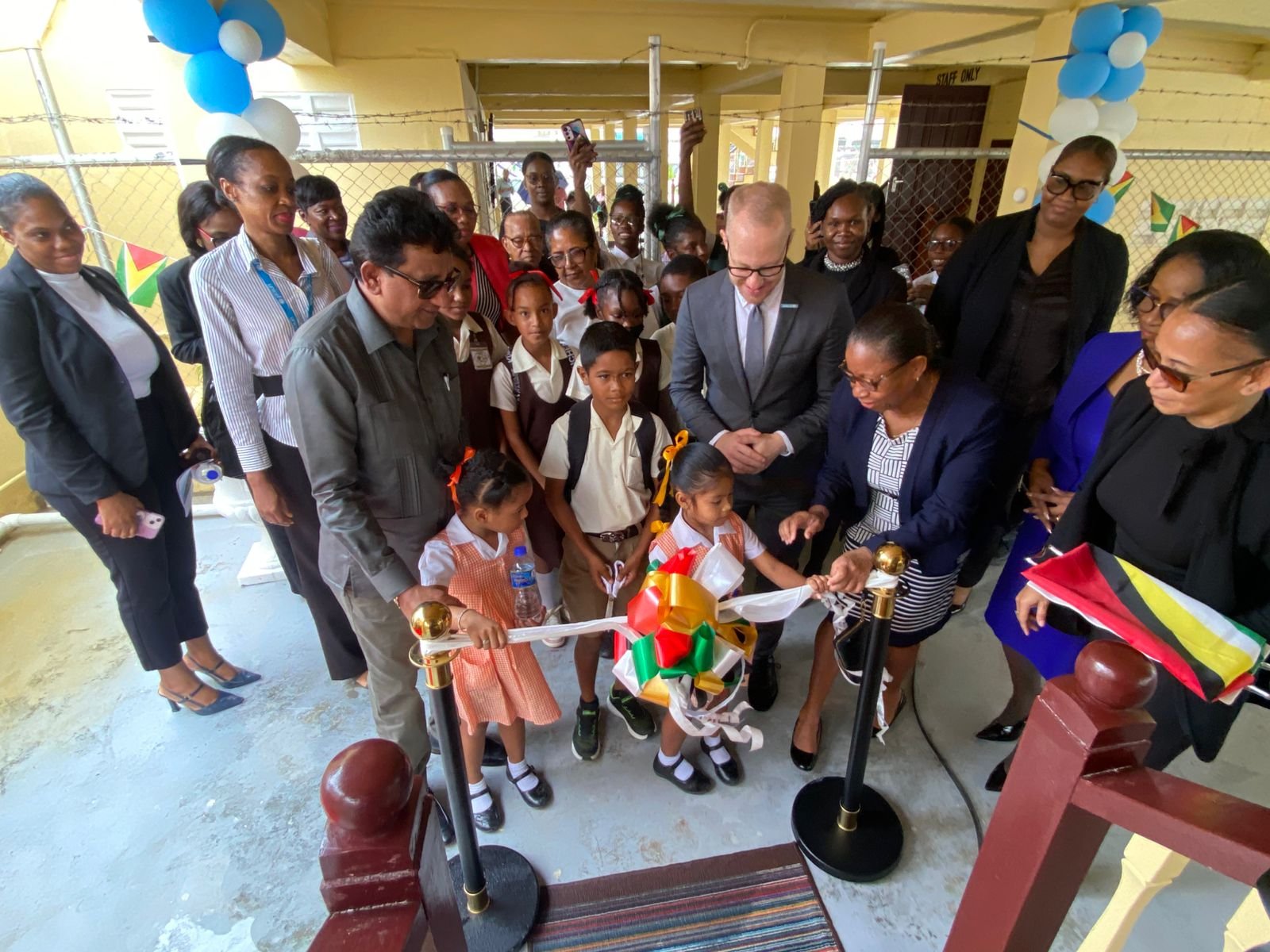
In a historic move toward reforming juvenile justice, the Judiciary of Guyana, in collaboration with UNICEF, has officially opened a Children’s Court at the Charity Magistrate’s Court in the Essequibo Magisterial District. Built at a cost of $72 million, the court is designed to support restorative justice and the rehabilitation of children who come into contact with the law.
This facility, the first of its kind in Region Two, marks a transformative shift in how Guyana addresses juvenile justice. The investment funded the complete renovation and modernisation of the existing court, the construction of an annex, upgraded electrical systems, fencing, new washroom facilities, and specialised child-friendly features.
The ribbon-cutting and unveiling ceremony was led by Attorney General and Minister of Legal Affairs, Mohabir Anil Nandlall, Chancellor of the Judiciary Justice Yonette Cummings-Edwards, Chief Justice Roxane George, and UNICEF acting Area Representative for Guyana and Suriname, Gabriel Vockel.
The Children’s Court is grounded in the principles of the Juvenile Justice Act of 2018, which promotes rehabilitation over punishment. It provides clear protocols on how children should be treated from the moment of arrest, through court proceedings, to sentencing—ensuring their rights are respected every step of the way.
“This court is not just about law—it’s about healing, hope, and helping children rewrite their stories,” said Justice of Appeal Navindra Singh, who called the court “truly transformational” for Essequibo. “Restorative justice gives our youth a second chance, helping them understand accountability and grow into better versions of themselves.”
Attorney General Anil Nandlall emphasised that the court is a reflection of the government’s firm belief that children are the nation’s most valuable resource.
“Every mechanism must prioritise the welfare of the child. This court does exactly that—it supports their growth, education, and reintegration into society,” Nandlall stated. He added that Guyana has adopted modern legislation on custody, adoption, and child protection, and has signed on to key United Nations protocols related to children’s rights.
He also pointed to supportive initiatives like the “Because We Care” cash grant, underscoring the government’s broader efforts to assist families in raising and educating children.
UNICEF Representative Gabriel Vockel described the opening as a “historic milestone” in advancing child rights and justice in Guyana.
“This court expands access to justice for children and reflects our shared vision under Sustainable Development Goal 16: Peace, Justice, and Strong Institutions,” he said.
Vockel reaffirmed UNICEF’s commitment to partnering with Guyana to create safe and empowering environments for all children.
Chief Justice Roxane George noted that this is the third Children’s Court in Guyana, highlighting its role in supporting restorative and rehabilitative justice. She referenced Article 40 of the Juvenile Justice Act, which guarantees children dignity and respect when dealing with the legal system.
“This is a place where children are not lost in the system. It is a space of reintegration, transformation, and justice designed with their best interests at heart,” Justice George said. She affirmed plans to expand similar courts across Guyana.
Regional Chairperson Vilma De Silva noted that with over 15,000 children in Region Two, the court represents a timely and essential investment in the future. She called on parents to embrace new forms of discipline and thanked the Ministry of Legal Affairs and UNICEF for their commitment.