Submit News
 About us
 Advertise
 Contact us


 Aug 05, 2026
  4 min read
 Horse racing and tapeball cricket unite in new Guya...
In a landmark convergence of Guyana’s most passionate sporting cultures, horse racing and grassroots cricket have officially joined forces. The organisers of...


09 Aug 2026

In a landmark convergence of Guyana’s most passionate sporting cultures, horse racing and grassroots cricket have officially joined forces. The organisers of...

Any state initiative in the bottled water sector should be structured to strengthen, not compete with or undermine, existing private investment, the...

The family of two-year-old Larissa, who was diagnosed with West syndrome at two months old and experiences up to 100 seizures...

 Experts: Boys need more positive role models


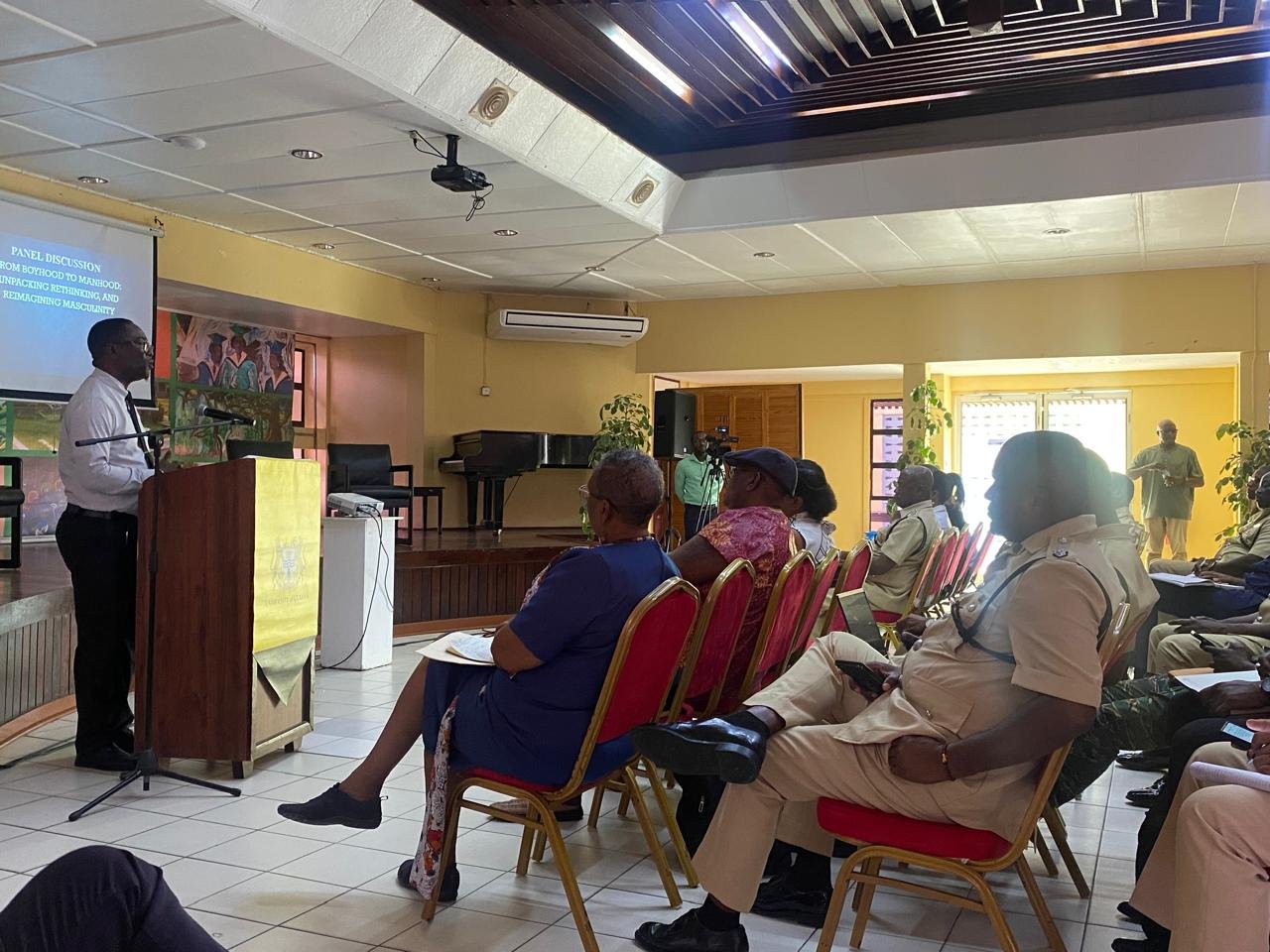
Several experts have agreed that there is currently a need for more positive role models for boys, as they navigate psychological, social, and other challenges in society.
This was a central message today when the University of Guyana’s Institute of Gender Studies, in collaboration with the Department of Language and Cultural Studies (FEH) and the Faculty of Education and Humanities, hosted a panel discussion titled “From Boyhood to Manhood: Unpacking, Rethinking and Reimagining Masculinity.”
The hybrid event, aimed at exploring issues related to gender, identity, and addressing the evolving definitions of masculinity, took place at the university’s Education Lecture Theatre (ELT), Turkeyen Campus.
Panelist Professor Linden F. Lewis pointed to the importance of monitoring the transition from boyhood to manhood, as he outlined the challenge that many households in the Caribbean are single-parent households.
“If that is the case, then what are we saying about the role of mothers in parenting? About the absence of fathers? Even though there are other male role models on which a young boy could call; namely, uncles, male teachers, pastors, and other influential men in society…We, as adults have a responsibility to our young men and boys to set better examples, we just have to learn to set better examples,” he noted.
Meanwhile, Principal Dr. Mark Lyte gave insights into study research which he conducted based on the achievements of boys and why they are seemingly “left behind.”
He said if boys are left behind, then this has implications for men.
Dr. Lyte also highlighted that there is an absence of favourable masculine role models in the home—as in the case of single-parent households—noting that this presents many challenges.
“The literature supports the facts that the absence of a favourable masculine role model in the home could be a problem. In many homes, children are saying, ‘I don’t know my father.’ There’s no father figure in the home,” he said.
Additionally, Professor Paloma Mohamed, in delivering remarks, pointed to several initiatives aimed at looking into the state of men in society.
“The question of what is going on with our boys and our men is something that has been, of course, troubling to us in the Caribbean in particular,” she noted.
“The question of how men operate and how the kinds of support that is present in our society for men is something on the national agenda. The President himself has launched his MOM [Men On a Mission] initiative,” she said.
She noted that initiatives such as this and others are also aimed at identifying what is driving violence and other issues that affect men.