Submit News
 About us
 Advertise
 Contact us


 Aug 05, 2026
  4 min read
 Horse racing and tapeball cricket unite in new Guya...
In a landmark convergence of Guyana’s most passionate sporting cultures, horse racing and grassroots cricket have officially joined forces. The organisers of...


10 Aug 2026

In a landmark convergence of Guyana’s most passionate sporting cultures, horse racing and grassroots cricket have officially joined forces. The organisers of...

Any state initiative in the bottled water sector should be structured to strengthen, not compete with or undermine, existing private investment, the...

The family of two-year-old Larissa, who was diagnosed with West syndrome at two months old and experiences up to 100 seizures...

 Guyana’s wealth generation, biodiversity conservation ability hailed as model for the world


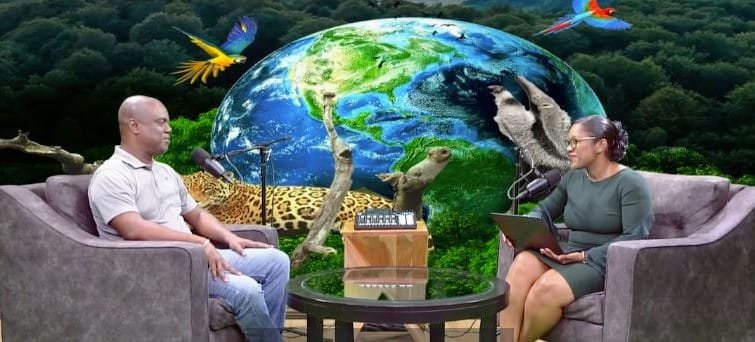
Guyana’s approach to economic growth and biodiversity conservation is being hailed as a global example of how countries can build wealth without compromising their natural environment.
The country has demonstrated a strong commitment to environmental protection through its pioneering Low Carbon Development Strategy (LCDS), even as it embarks on the rapid development of its oil resources.
Vice President of Conservation International Guyana, Curtis Bernard, highlighted the LCDS as a replicable model during a recent episode of United for Biodiversity: The Alliance Podcast.
“The Low Carbon Development Strategy for me is another step in that direction where we are actually stepping out and demonstrating to the world… a national development strategy that explicitly states that we are going to be improving the way that people live, the access to resources that we have while at the same time maintaining nature and will be looking to grapple with the challenges of doing that,” Bernard said.
He noted the challenges countries face in preserving their environment while pursuing growth through natural resource extraction. Many, he said, follow the traditional path of converting natural capital into financial wealth and addressing environmental issues afterward.
Bernard pointed out that in many wealthier nations, natural capital forms a small part of total wealth, giving Guyana a unique opportunity to develop its social and capital wealth while conserving its ecosystems.
“Guyana has the opportunity through the Low Carbon Development Strategy to look at how it is we can continue our traditional sectors. We have been mining for hundreds of years in Guyana but yet we maintain almost 90 per cent of our forest intact and most of the rest eco systems are intact as well. Some of that remaining ecosystem is one of the largest intact grasslands in northern South America; the Rupununi savannahs,” he said.
The LCDS, Bernard added, provides a platform for transforming traditional industries and advancing sustainable sectors like carbon credit markets.