Submit News
 About us
 Advertise
 Contact us


 Aug 05, 2026
  4 min read
 Horse racing and tapeball cricket unite in new Guya...
In a landmark convergence of Guyana’s most passionate sporting cultures, horse racing and grassroots cricket have officially joined forces. The organisers of...


10 Aug 2026

In a landmark convergence of Guyana’s most passionate sporting cultures, horse racing and grassroots cricket have officially joined forces. The organisers of...

Any state initiative in the bottled water sector should be structured to strengthen, not compete with or undermine, existing private investment, the...

The family of two-year-old Larissa, who was diagnosed with West syndrome at two months old and experiences up to 100 seizures...

 GECOM says seat replacements must come from same party list


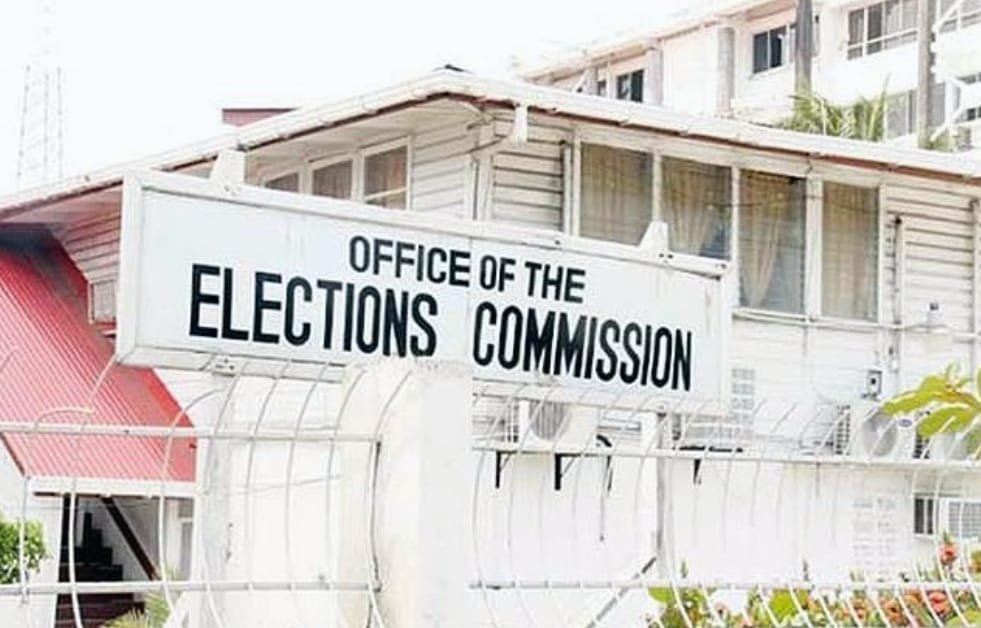
Vacancies in the National Assembly must be filled by a person whose name appears on the same list as the departing member, and the extraction must be done solely by that list’s Representative or Deputy Representative, the Guyana Elections Commission (GECOM) said on Thursday.
The clarification follows GECOM’s extensive deliberations on the legal provisions governing the joinder of lists and the filling of parliamentary vacancies. The Commission emphasised that each party in a joinder retains its own Representative and Deputy Representative for the purpose of extracting candidates to become Members of the National Assembly. Therefore, only these designated officials from the party or parties allocated seats can lawfully conduct such extractions.
This affirmation follows public scrutiny surrounding The New Movement (TNM) leader Dr Asha Kissoon’s refusal to vacate her parliamentary seat, despite the expiration of her rotation term under an agreement with other small parties in the joinder.
Lennox Shuman, leader of the Liberty and Justice Party, had previously served his term and vacated his seat for Dr Kissoon in accordance with the coalition arrangement. However, when it was time for A New and United Guyana (ANUG) to take its turn, Dr Kissoon resisted stepping aside. ANUG leaders have since spoken out strongly against her continued occupation of the seat.
GECOM clarified that its conclusions were based strictly on the legal framework provided by the Representation of the People Act (ROPA). Under Section 22(1) of the Act, two or more political party lists may be combined for the allocation of parliamentary seats through a process called a “joinder of lists.” While parties appear separately on the ballot paper and votes are cast for individual parties, for seat allocation purposes, the combination is treated as one list.
In such cases, GECOM explained, valid votes from all parties in the combination are aggregated. A determination must first be made that the combination has won seats in the National Assembly. The electoral quota is calculated by dividing the total number of valid votes cast by 65. If the combination is awarded seats, a further internal quota is derived by dividing the total valid votes received by the combination by the number of seats it secured.
Seats are then distributed among the parties based on their share of the vote. Any remaining unallocated seat is given to the party with the largest surplus votes. If the combination wins only one seat, that seat is assigned to the party that received the highest number of votes in the grouping.
GECOM also invoked Section 99A of ROPA, which outlines that a person selected to fill a parliamentary vacancy must not already be an elected member, must be qualified and willing to serve, and must appear on the same list as the vacating member.