Submit News
 About us
 Advertise
 Contact us


 Aug 05, 2026
  4 min read
 Horse racing and tapeball cricket unite in new Guya...
In a landmark convergence of Guyana’s most passionate sporting cultures, horse racing and grassroots cricket have officially joined forces. The organisers of...


08 Aug 2026

In a landmark convergence of Guyana’s most passionate sporting cultures, horse racing and grassroots cricket have officially joined forces. The organisers of...

Any state initiative in the bottled water sector should be structured to strengthen, not compete with or undermine, existing private investment, the...

The family of two-year-old Larissa, who was diagnosed with West syndrome at two months old and experiences up to 100 seizures...

 Migrant support fuelling development


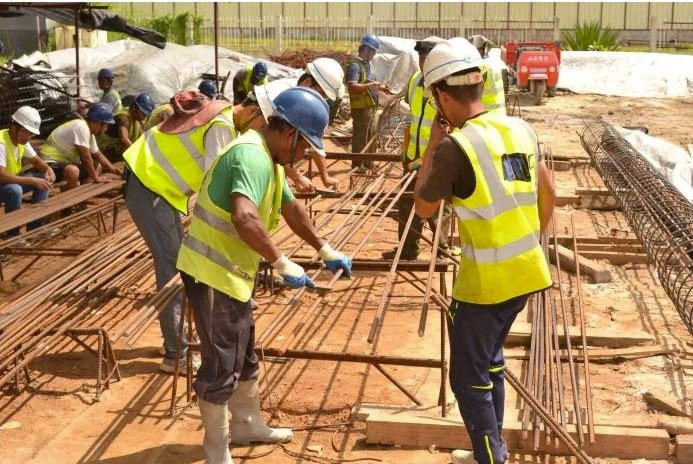
Economist Richard Rambarran says the knowledge and skill sets of migrant workers have played a vital role in filling labour market gaps in Guyana’s rapidly growing economy.
Rambarran, who collaborated with the International Organisation for Migration (IOM) on a report analysing the labour market in Guyana, shared his insights during a recent exclusive interview with Ignite News Insights.
“We have obviously modelled the labour market and examined that even if one takes all of the workers in Guyana who are unemployed, underemployed or in part-time work and we place them completely into the labour force, based on the rate of growth of the economy we will still need to fill the labour market gap. That is to say the gap between supply and demand,” Rambarran explained.
He further acknowledged the crucial support of migrant workers in this regard.
“As a country we could not have been able to realise our full rates of economic growth, we would not have been able to realise our full potential without support from migrant workers and expatriate workers. The reason is the economy has been expanding so rapidly,” he emphasised.
According to Rambarran, rapid expansion has created new areas of service in Guyana where the required skill sets have not traditionally existed, underscoring the importance of filling those gaps.
Failure to do so, he cautioned, could prevent Guyana from fully realising its growth potential, amounting to “leaving money on the table.”
He also pointed to existing skills mismatches, stressing the need to upskill and retrain the local labour force while ensuring academic programmes remain accessible and affordable.

Rambarran concluded that while migrant workers and expatriates are currently bridging the skills gap, Guyana is actively preparing its own workforce to eventually assume those roles.