Submit News
 About us
 Advertise
 Contact us


 Aug 05, 2026
  4 min read
 Horse racing and tapeball cricket unite in new Guya...
In a landmark convergence of Guyana’s most passionate sporting cultures, horse racing and grassroots cricket have officially joined forces. The organisers of...


08 Aug 2026

In a landmark convergence of Guyana’s most passionate sporting cultures, horse racing and grassroots cricket have officially joined forces. The organisers of...

Any state initiative in the bottled water sector should be structured to strengthen, not compete with or undermine, existing private investment, the...

The family of two-year-old Larissa, who was diagnosed with West syndrome at two months old and experiences up to 100 seizures...

 APNU promises to address concerns of Paramakatoi residents


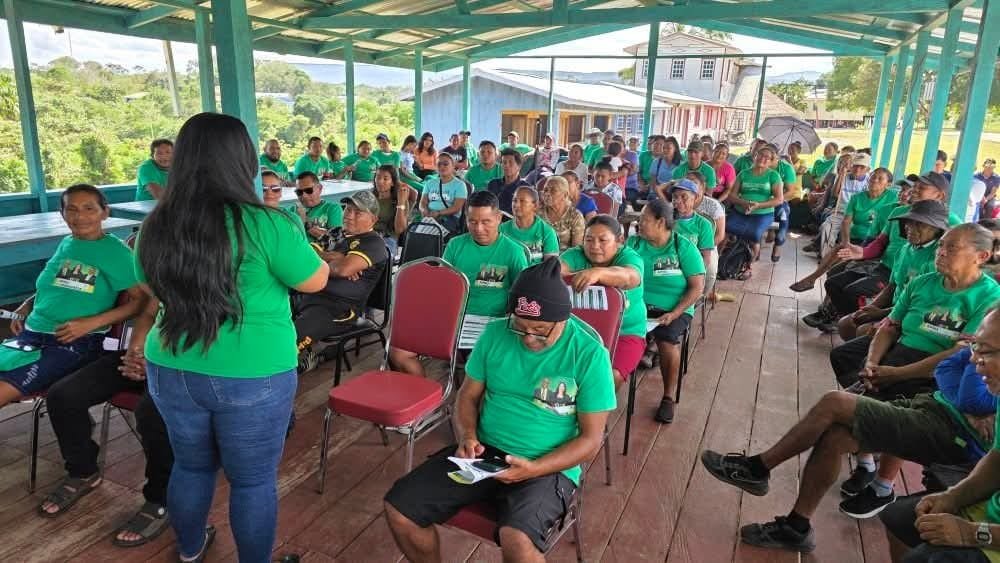
Prime Ministerial candidate for A Partnership for National Unity (APNU), Juretha Fernandes, has pledged that her party will address key concerns raised by residents of Paramakatoi, Region Eight, if elected to government.
At a recent public meeting, villagers highlighted pressing needs, including repairs to the doctor’s quarters, upgrades to the community health centre, and improved arrangements for patients returning from medical referrals in Georgetown.
They also appealed for support in building homes, job creation, and assistance to farmers, who expressed frustration over unfulfilled government promises.
Farmers further called for improved security, including firearm access to protect their livelihoods, and reliable water supply to sustain agriculture.
Responding to these concerns, Fernandes said they would be incorporated into APNU’s broader hinterland development strategy. She outlined several proposed measures, including tackling the high cost of living, targeted investment in hinterland economies, and diversifying industries beyond mining.
She noted that an APNU government would provide financial relief through a 35 per cent salary increase for government workers, a $100,000 monthly pension, and a $120,000 annual school grant per child.
Fernandes also promised renewed investment in infrastructure, reintroduction of Guyana Airways to reduce transport costs, amendments to the Amerindian Act, and an increase in Carbon Credit allocations to Indigenous communities from 15 to 50 per cent. She emphasised empowering village leaders and strengthening social services, including school meals.