Submit News
 About us
 Advertise
 Contact us


 Aug 05, 2026
  4 min read
 Horse racing and tapeball cricket unite in new Guya...
In a landmark convergence of Guyana’s most passionate sporting cultures, horse racing and grassroots cricket have officially joined forces. The organisers of...


12 Aug 2026

In a landmark convergence of Guyana’s most passionate sporting cultures, horse racing and grassroots cricket have officially joined forces. The organisers of...

Any state initiative in the bottled water sector should be structured to strengthen, not compete with or undermine, existing private investment, the...

The family of two-year-old Larissa, who was diagnosed with West syndrome at two months old and experiences up to 100 seizures...

 Breast Cancer Awareness Month: Survivors share powerful stories of courage and resilience


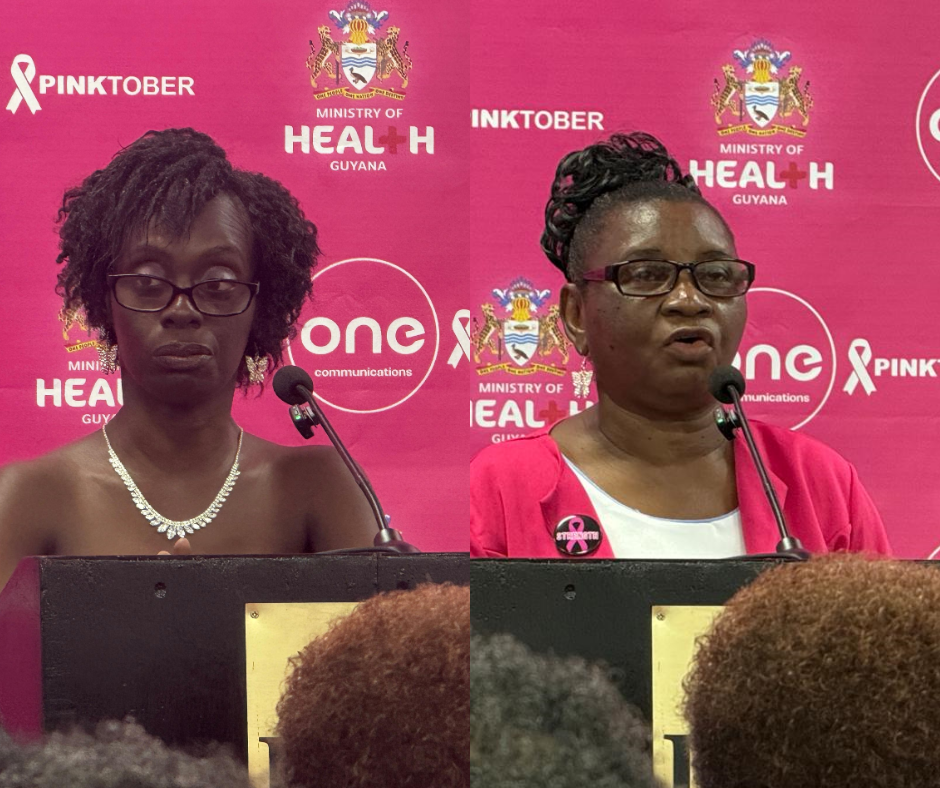
October is Breast Cancer Awareness Month—a time dedicated to raising awareness, promoting early detection, and honoring the strength of those who have fought the disease.
On Thursday, survivors shared deeply personal stories during a moving segment titled “Voices of Strength” at the launch of Pinktober, turning their pain into powerful testimony.
For Rose Clarke, the disease is painfully woven into her family history.
“My journey started in 2016 when I travelled to New York to visit my sister. I must say that I come from a family of nine, in which eight was treated with cancer. Two died—the men with prostate cancer, the women with breast cancer, cervical cancer. I didn’t know that my sister that I was staying at, she had just done a surgery for cancer. The one that died, I didn’t know that it was cancer because they tend to hide it like is some taboo,” Clarke revealed.
Her diagnosis came after she discovered a lump underneath her arm upon returning home to Guyana. What followed was a battle marked by both personal loss and resilience.
During her treatment, she endured the passing of her mother and her husband. Yet through the darkest moments, she found strength in her granddaughter’s reassurances.
Clarke completed treatment and was declared cancer free, only to face another devastating blow—she was diagnosed with cervical cancer within the same year. Despite the setback, she continues to fight with unyielding determination.
For fellow survivor Roneta Williams, her journey began even before the age of forty, challenging the traditional notion of when women should begin screening.
“I was not thinking about anything pertaining to cancer. I was not thinking about having any screenings done because I was not forty, we are told as women that we should have a mammogram done at forty but my advice is before you get to forty you can still have self examinations done every month,” she urged.
Williams, too, fought her way to recovery and was declared cancer free, though she was later cautioned by doctors to remain vigilant for signs of recurrence.
Her story, like Clarke’s, is one of courage and advocacy—using her voice to encourage other women to act early and prioritize their health.
Both women expressed profound gratitude for the courage that carried them through their battles, and for the support systems that gave them strength when they needed it most.
As Guyana observes Breast Cancer Awareness Month, their stories serve as a poignant reminder that behind every pink ribbon is a personal battle, a family affected, and a victory worth celebrating.
Early detection, they stressed, can save lives.
By sharing their experiences, Clarke and Williams shine a light of hope for those still fighting, while inspiring communities to stand together in solidarity against breast cancer.