Submit News
 About us
 Advertise
 Contact us


 Aug 05, 2026
  4 min read
 Horse racing and tapeball cricket unite in new Guya...
In a landmark convergence of Guyana’s most passionate sporting cultures, horse racing and grassroots cricket have officially joined forces. The organisers of...


12 Aug 2026

In a landmark convergence of Guyana’s most passionate sporting cultures, horse racing and grassroots cricket have officially joined forces. The organisers of...

Any state initiative in the bottled water sector should be structured to strengthen, not compete with or undermine, existing private investment, the...

The family of two-year-old Larissa, who was diagnosed with West syndrome at two months old and experiences up to 100 seizures...

 Engineering, procurement near completion on Wales Gas-to-Energy Project


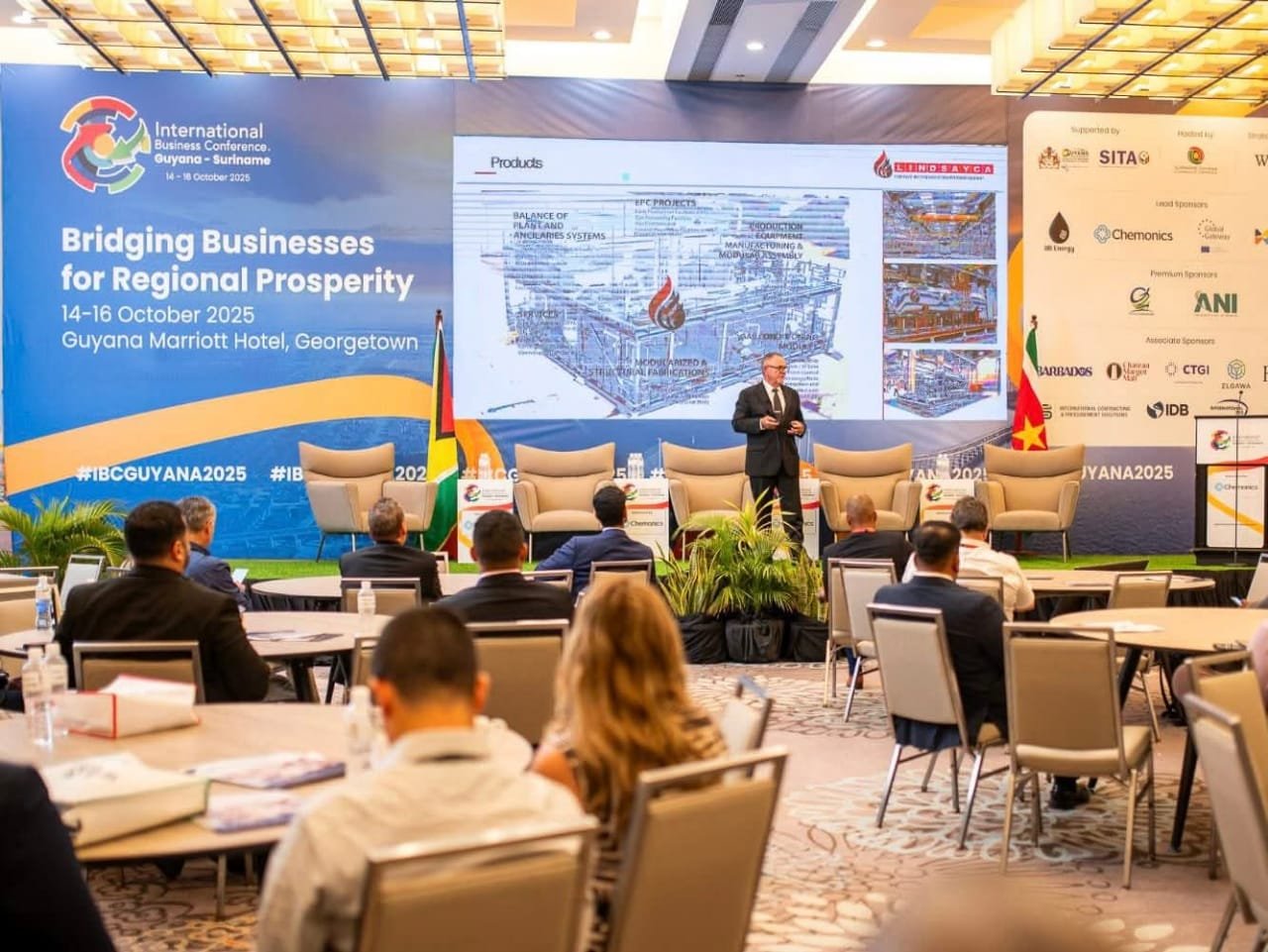
Engineering and procurement for the Wales Gas-to-Energy Project are almost complete, at 89 per cent and 90.46 per cent respectively, Chairman of Lindsayca/LND Guyana, Nelson Drake said.
Overall progress on the project has reached 68.3 per cent.
Drake said construction was now accelerating after months of critical groundwork.
“We had to first make sure the foundation could carry the load,” Drake said, adding that “It took about 14 months to stabilise the soil, that’s 250,000 cubic meters of sand and over US$100 million invested before we could start building vertically.”
He said construction activity would now become more visible, as crews pour concrete for new foundations “every seven to ten days”.
“A lot of people will look at the numbers and think it’s slow,” he added, “but 75 per cent of our major equipment is already in Georgetown. Once the foundations are ready, we move quickly the turbines, transformers, and electrical gear are all here.”
The 300-megawatt combined-cycle plant, located at Wales on the West Bank of Demerara, is the centerpiece of Guyana’s plan to harness natural gas from ExxonMobil’s offshore fields. It will process 50 million cubic feet of gas per day to generate cheaper, cleaner power and reduce dependence on imported heavy fuel.
Drake said the process plant was en route from Houston, and that a 120-day plan was in place to complete the turbine foundations and begin equipment installation before year-end.
“Our goal is to achieve first power between January and March 2026,” Drake said. “We’re adding about 400 new workers and pushing 24-hour shifts to meet that timeline,” he noted.
Government officials have described the initiative as transformative, saying it is expected to cut national electricity costs by more than 50 per cent, improve grid stability, and attract large-scale industrial investment.
Once commissioned, the project is expected to power homes, businesses, and industries while positioning Guyana as a regional model for energy transition.