Submit News
 About us
 Advertise
 Contact us


 Aug 05, 2026
  4 min read
 Horse racing and tapeball cricket unite in new Guya...
In a landmark convergence of Guyana’s most passionate sporting cultures, horse racing and grassroots cricket have officially joined forces. The organisers of...


12 Aug 2026

In a landmark convergence of Guyana’s most passionate sporting cultures, horse racing and grassroots cricket have officially joined forces. The organisers of...

Any state initiative in the bottled water sector should be structured to strengthen, not compete with or undermine, existing private investment, the...

The family of two-year-old Larissa, who was diagnosed with West syndrome at two months old and experiences up to 100 seizures...

 Rice farmers struggle with high private land fees despite government reductions


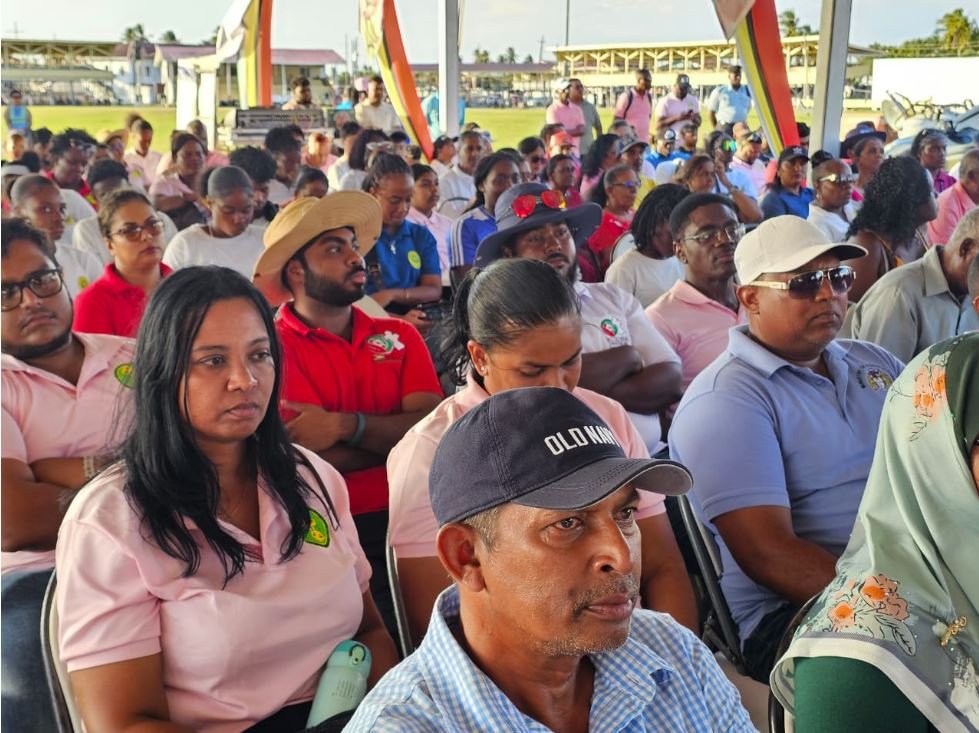
Rice farmers continue to face unsustainable land lease costs on the private market, despite government efforts to reduce official land rental and drainage and irrigation (D&I) charges.
Speaking at a recent public forum in Burma, Mahaicony, Agriculture Minister Zulfikar Mustapha said the government reduced land rental and D&I charges from $15,000 per acre to $3,500 per acre in October 2020, shortly after taking office.
“The reality is different on the ground. People who own the land or have leases are charging $35,000 to $46,000 per acre. And sometimes, farmers themselves contribute to this problem by racing one another to get the land,” he observed.
He added that the situation is worsened by subletting, which is prohibited under current lease agreements but continues to occur. The government is taking legal steps to enforce these clauses through the Rice Assessment Committee, established under existing legislation.
Highlighting the financial pressure on farmers, Minister Mustapha noted that in areas such as Black Bush Polder, a 15-acre plot could cost as much as $700,000 in rental fees alone, significantly reducing profits even before production costs are considered.
“The land rental from the MMA is $3,500 per acre, yet farmers are paying landlords up to $45,000 per acre,” he explained.
The remarks come as the government promotes agricultural innovation aimed at improving crop yields and supporting farmers.