Submit News
 About us
 Advertise
 Contact us


 Aug 05, 2026
  4 min read
 Horse racing and tapeball cricket unite in new Guya...
In a landmark convergence of Guyana’s most passionate sporting cultures, horse racing and grassroots cricket have officially joined forces. The organisers of...


07 Aug 2026

In a landmark convergence of Guyana’s most passionate sporting cultures, horse racing and grassroots cricket have officially joined forces. The organisers of...

Any state initiative in the bottled water sector should be structured to strengthen, not compete with or undermine, existing private investment, the...

The family of two-year-old Larissa, who was diagnosed with West syndrome at two months old and experiences up to 100 seizures...

 US tariffs of 15 per cent on Guyanese exports could be cut to 10 per cent


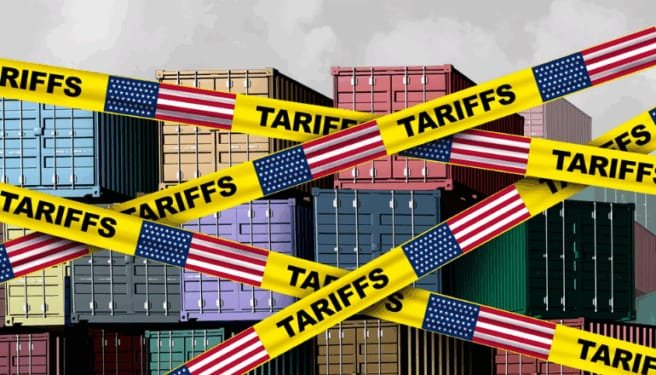
The cost of trading with the United States could become cheaper as negotiations to further reduce the 15 per cent reciprocal tariff are expected.
A high-level U.S. trade team will arrive in Guyana for this purpose.
U.S. Ambassador to Guyana Nicole Theriot told the Sources programme that senior trade representatives are expected to engage the government on this. They will also discuss other trade matters.
Guyana was among several countries hit with an arbitrary tariff last year. It received one of the highest rates in the region at 38 per cent. However, diligent engagement by the Guyana government saw the United States reduce the tariff to 15 per cent. As a result, there are now new considerations for further reductions, Theriot said.
She explained that the original 38 per cent rate was based on high oil and gas exports to the United States. However, trade outside of crude is very different.
“They (US) realised that and through careful and very thoughtful discussions with your government they decided to reduce it to 15 per cent; and there are absolutely discussions ongoing to reduce it further,” the Ambassador said.

Theriot added that the reciprocal tax could be reduced to as low as 10 percent.
Last year, then-U.S. President Donald Trump announced trade tariffs as part of a “reciprocal” trade policy targeting countries that imported less from the United States than they exported.
Guyana successfully disputed the data used by the United States in determining the initial tariff, which ultimately led to the sharp reduction from 38 per cent.