Submit News
 About us
 Advertise
 Contact us


 Aug 05, 2026
  4 min read
 Horse racing and tapeball cricket unite in new Guya...
In a landmark convergence of Guyana’s most passionate sporting cultures, horse racing and grassroots cricket have officially joined forces. The organisers of...


07 Aug 2026

In a landmark convergence of Guyana’s most passionate sporting cultures, horse racing and grassroots cricket have officially joined forces. The organisers of...

Any state initiative in the bottled water sector should be structured to strengthen, not compete with or undermine, existing private investment, the...

The family of two-year-old Larissa, who was diagnosed with West syndrome at two months old and experiences up to 100 seizures...

 CANU says cocaine in footwear passenger did not originate from Guyana


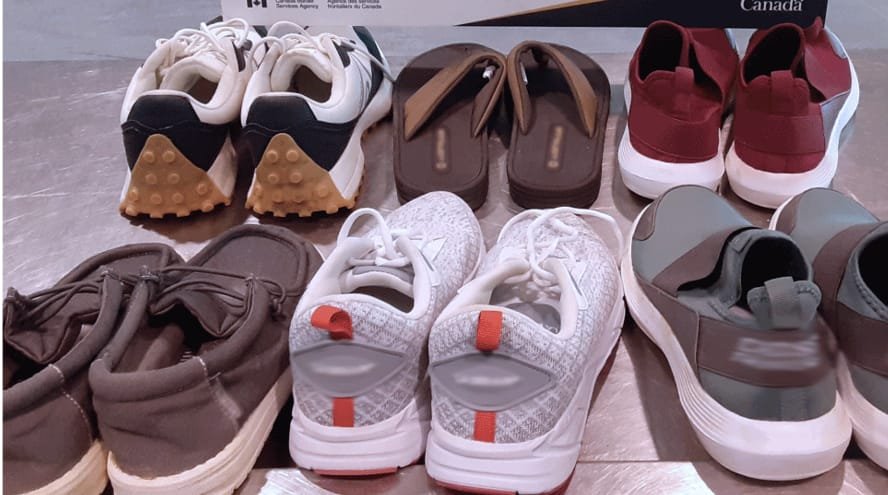
The Customs Anti-Narcotic Unit (CANU) has said that the recent seizure of cocaine in footwear, which occurred in Canada on 26 May 2025, did not originate from Guyana.
CANU, in a press release issued this morning, noted that the passenger in question boarded Caribbean Airlines flight BW 616 in Trinidad as an in-transit passenger to Canada as his final destination.
“Immigration records indicate that the passenger did not disembark the flight when it landed in Guyana,” the release stated.
The Canada Border Services Agency (CBSA) initially claimed that agents at Toronto’s Pearson Airport seized more than $400,000 worth of cocaine that had been hidden in shoes last month.
Border services had noted that they arrested a traveller arriving from Guyana on 26 May after 3.5 kilograms of the drug were discovered inside their luggage.
“The cocaine was found using contraband detection technology,” a CBSA spokesperson told CTV News Toronto in an email.
“Some of the detection technology employed by the CBSA includes ion mobility spectrometry, X-rays, and Narcotic Identification Kits. These tools, in combination with the officers’ knowledge, experience and training, enable successful enforcement actions.”
The total value of the cocaine is more than $437,000.
The CBSA had also indicated that it was unable to disclose the traveller’s citizenship, as “an individual’s border and immigration information is considered private and protected by the Privacy Act.”