Submit News
 About us
 Advertise
 Contact us


 Aug 05, 2026
  4 min read
 Horse racing and tapeball cricket unite in new Guya...
In a landmark convergence of Guyana’s most passionate sporting cultures, horse racing and grassroots cricket have officially joined forces. The organisers of...


11 Aug 2026

In a landmark convergence of Guyana’s most passionate sporting cultures, horse racing and grassroots cricket have officially joined forces. The organisers of...

Any state initiative in the bottled water sector should be structured to strengthen, not compete with or undermine, existing private investment, the...

The family of two-year-old Larissa, who was diagnosed with West syndrome at two months old and experiences up to 100 seizures...

 GFSL launches first inter-laboratory training on Atomic Absorption Spectroscopy


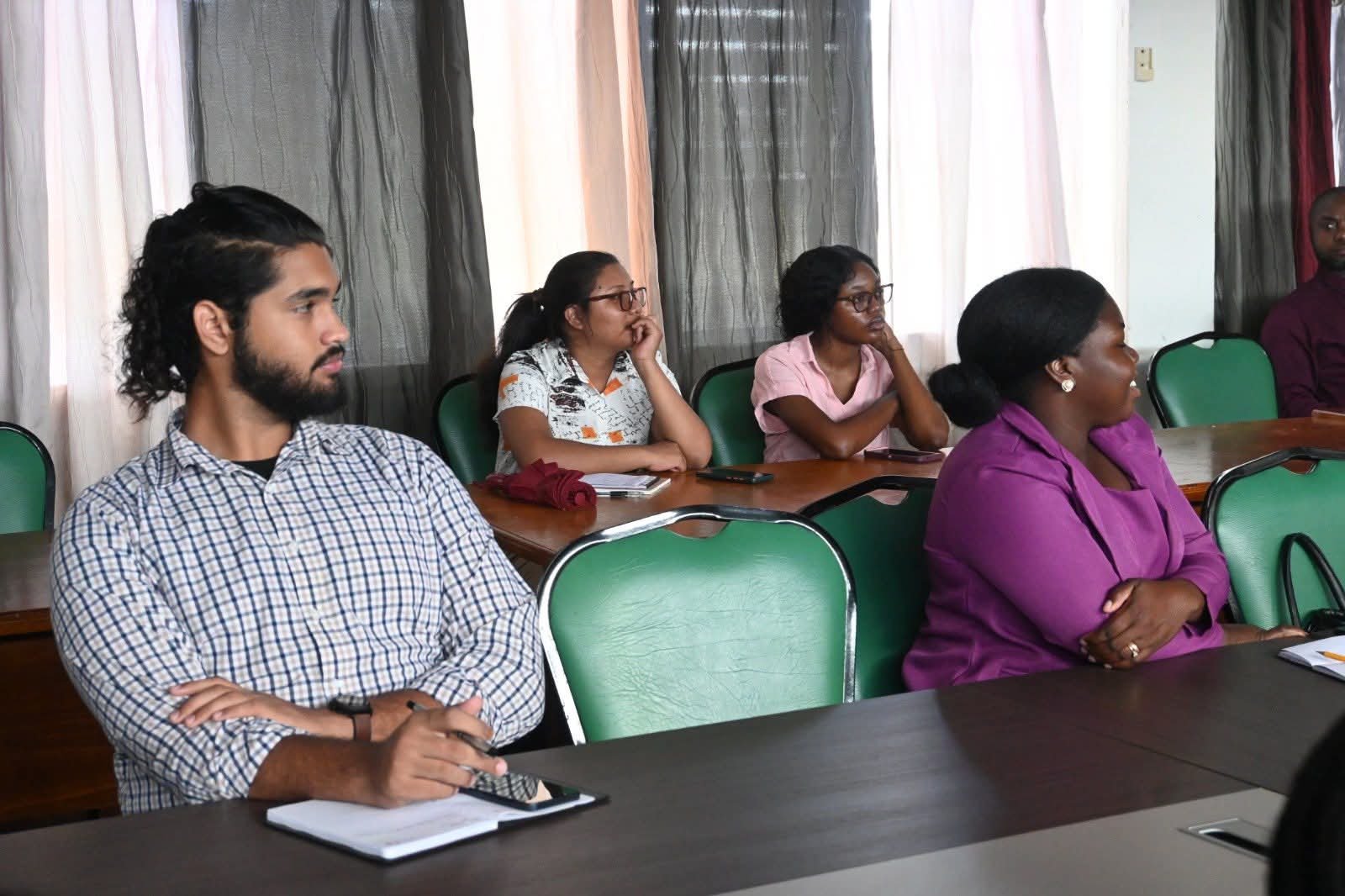
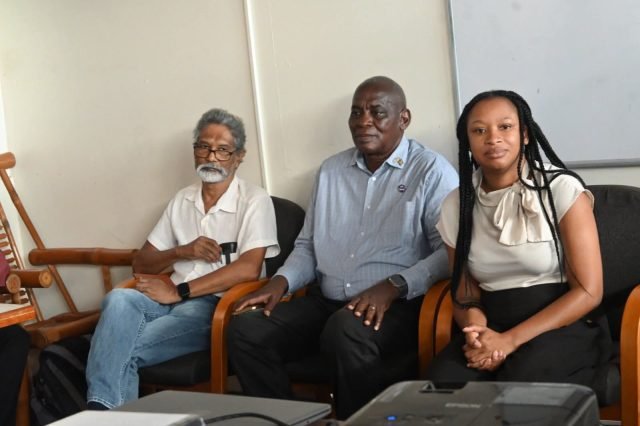
The Guyana Forensic Science Laboratory (GFSL), in partnership with the Government Analyst–Food and Drug Department (GA-FDD) and the Institute of Applied Science and Technology (IAST), today opened a three-day inter-laboratory training on Atomic Absorption Spectroscopy (AAS) at the IAST Boardroom, University of Guyana, Turkeyen Campus.
The training is aimed at strengthening technical capacity across laboratories in Guyana that use, or plan to adopt, Atomic Absorption (AA) systems, a release said.
Participants include representatives from the GFSL, GA-FDD, IAST, Guyana Geology and Mines Commission (GGMC), University of Guyana, Hydrometeorological Service, Pesticides and Toxic Chemicals Control Board, National Agricultural Research and Extension Institute, Guyana Sugar Corporation, IMEX, Rice Development Board, Guyana Power and Light, and Demerara Distillers Limited.
The initiative is the first of its kind in Guyana, spanning both public and private laboratories, and is being offered free of cost to ensure broad access and support national efforts in scientific advancement and sustainable development.
Over three days, attendees will take part in theoretical and practical sessions covering AAS principles, instrumentation and applications. The programme includes demonstrations of Flame AAS, Graphite Furnace AAS and Hydride Generation techniques, as well as training on Agilent SpectrAA software for real-time data acquisition, calibration and analysis.
Sessions also cover digestion and sample preparation, with emphasis on microwave-assisted digestion, and quality control procedures.
The training is led by Kumar Latchman, a specialist in Atomic Absorption Spectroscopy with academic and applied experience.
Opening the event, Minister Benn said Guyana was at a turning point. “We are at a particularly momentous point in the history of our Country. That’s the political development, but social, economic and scientific development,” he said.
He urged scientists to seize opportunities and apply rigorous practice. “You as scientists and engineers have the greatest opportunity going forward, and now the greatest platform in terms of excelling in your profession, in the opportunities we have now, this moment will not come again soon.”
Benn also stressed the importance of sample integrity: “Don’t just focus on doing it. You have to have some knowledge of what is upstream, how the samples collected, what integrity it has, what are the checks you could make for sample integrity in the suite of samples that we have?”
Calling for innovation, he added: “We can make our standards and replicate them … Can we do research to see what else we could make to make our processes more efficient, more scientifically reliable and more appropriate for circumstances.”
On national unity, the minister said: “We have to fly this plane together, irrespective of race, religion, class or culture… You have to learn to respect and love each other. Love each other more.”
Also attending were Delon France, Head of the GFSL; Deonarine Jagdeo, Director of the IAST; Ayodele Singh, PASO of GA-FDD; and Patrick Ketwaru, lecturer at the University of Guyana.
The training underscores the commitment of the GFSL, GA-FDD and IAST to expanding scientific capacity and ensuring that Guyanese laboratories deliver accurate and internationally recognized analyses.