Submit News
 About us
 Advertise
 Contact us


 Aug 05, 2026
  4 min read
 Horse racing and tapeball cricket unite in new Guya...
In a landmark convergence of Guyana’s most passionate sporting cultures, horse racing and grassroots cricket have officially joined forces. The organisers of...


11 Aug 2026

In a landmark convergence of Guyana’s most passionate sporting cultures, horse racing and grassroots cricket have officially joined forces. The organisers of...

Any state initiative in the bottled water sector should be structured to strengthen, not compete with or undermine, existing private investment, the...

The family of two-year-old Larissa, who was diagnosed with West syndrome at two months old and experiences up to 100 seizures...

 Guyana reaffirms human rights commitments as U.N. adopts fourth U.P.R. report


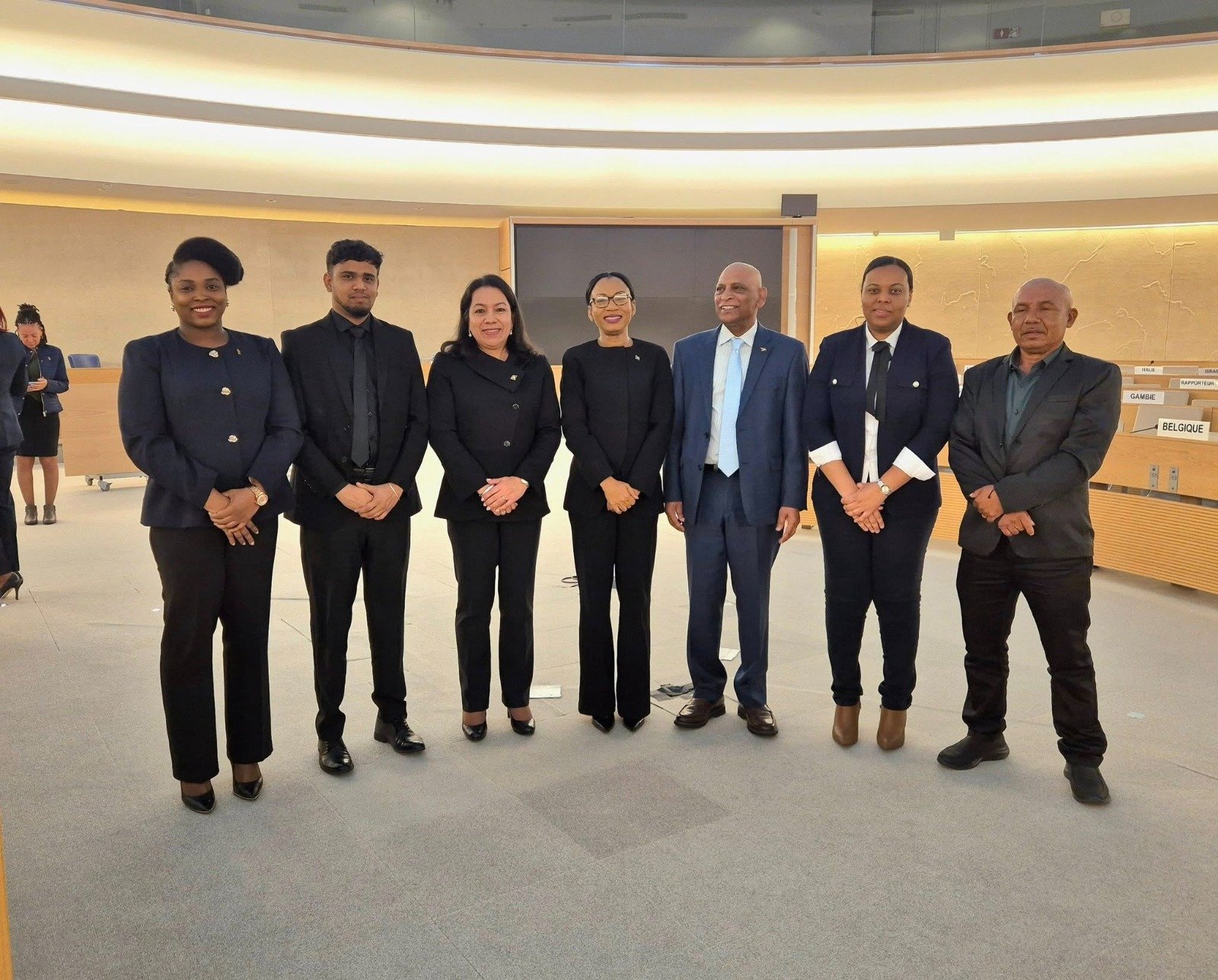
The United Nations Human Rights Council formally adopted Guyana’s Fourth Cycle Universal Periodic Review (UPR) this morning, concluding the country’s latest human rights assessment at the U.N.
The adoption, held at 10:00 a.m. Geneva time (4:00 a.m. Guyana time), follows months of consultation and review after Guyana’s presentation to the Working Group on the UPR in May. Out of 206 recommendations received during the interactive dialogue, Guyana fully supported 146, many of which are already in various stages of implementation. These cover areas such as strengthening democratic institutions, expanding access to justice, advancing gender equality, protecting Indigenous Peoples’ rights, reducing poverty, and accelerating climate action under the Low Carbon Development Strategy 2030.
An additional 58 recommendations were “noted” to be addressed through ongoing constitutional reform or further public consultation, while two recommendations were partially accepted after refinement to accurately reflect Guyana’s position.
Minister of Parliamentary Affairs and Governance, Hon. Gail Teixeira, who headed the Guyanese delegation, thanked the 70 Member States and the Troika members—Belgium, the Democratic Republic of Congo, and the Dominican Republic—for their constructive engagement. She also acknowledged support from the Office of the High Commissioner for Human Rights.
Delegations and UN agencies commended Guyana’s inclusive approach, particularly its acceptance of recommendations on gender equality, child protection, climate action, and social inclusion. Civil society groups welcomed progress on judicial reforms, environmental protections, and measures such as the decriminalisation of suicide, improved prison conditions, and expanded access to health, education, and housing.
Minister Teixeira reaffirmed Guyana’s commitment to the UPR process, calling it “a vital platform for transparency, mutual accountability, and dialogue,” and pledged to work with both domestic stakeholders and the international community to implement recommendations and advance a rights-based sustainable development agenda.
The adoption follows Guyana’s September 2025 elections and aligns with ongoing efforts to modernize legislation, strengthen democratic governance, and address global challenges such as climate change and resource constraints while upholding human rights.