Submit News
 About us
 Advertise
 Contact us


 Aug 05, 2026
  4 min read
 Horse racing and tapeball cricket unite in new Guya...
In a landmark convergence of Guyana’s most passionate sporting cultures, horse racing and grassroots cricket have officially joined forces. The organisers of...


07 Aug 2026

In a landmark convergence of Guyana’s most passionate sporting cultures, horse racing and grassroots cricket have officially joined forces. The organisers of...

Any state initiative in the bottled water sector should be structured to strengthen, not compete with or undermine, existing private investment, the...

The family of two-year-old Larissa, who was diagnosed with West syndrome at two months old and experiences up to 100 seizures...

 Four CARICOM states to implement full free movement from October 1


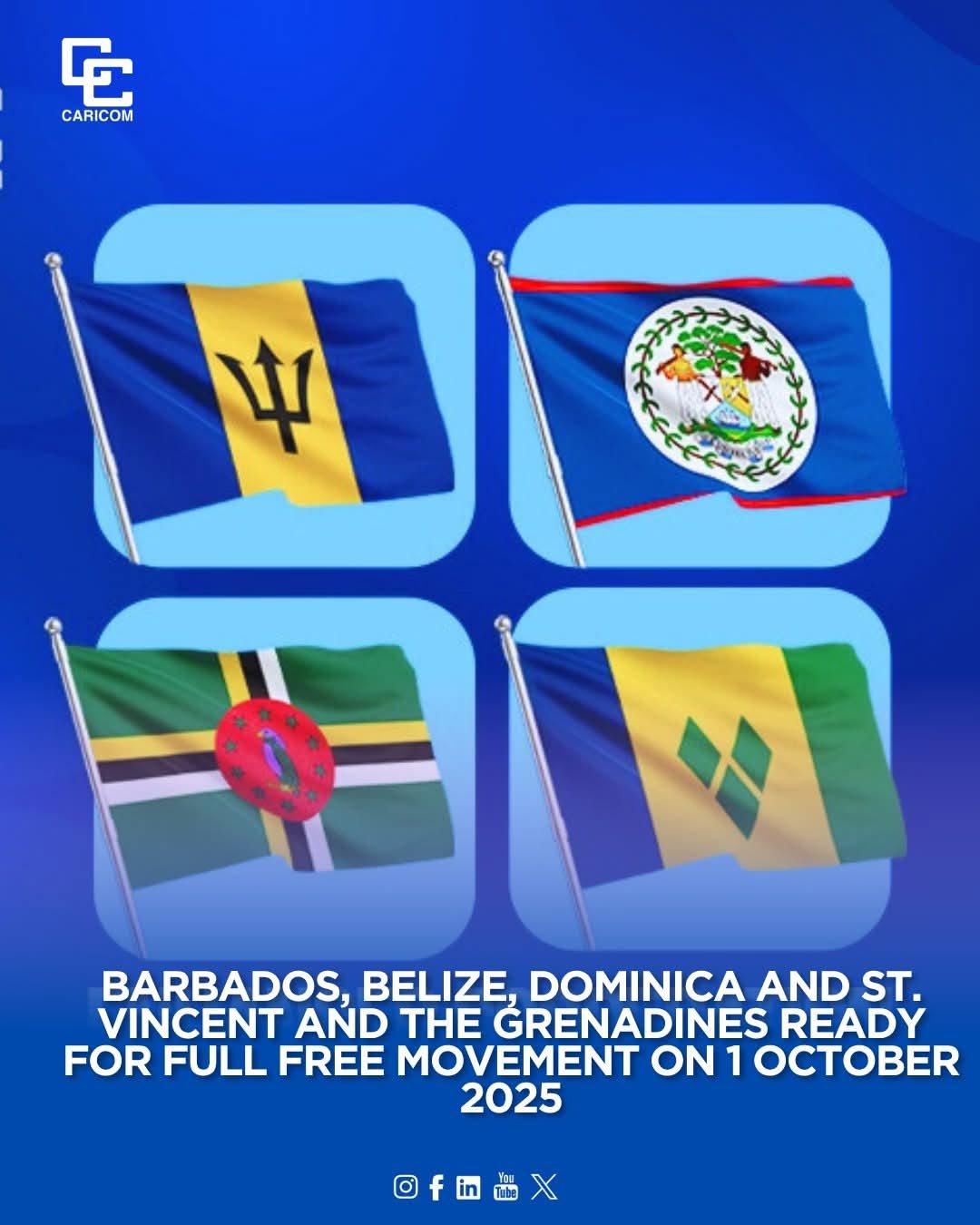
Barbados, Belize, Dominica, and St. Vincent and the Grenadines will implement full free movement of their nationals among themselves starting tomorrow, October 1, 2025.
This development means nationals of the four countries will no longer be limited to temporary six-month entry or entry under the CARICOM skills regime. Instead, they will be able to live and work indefinitely in any of the four states, with access to emergency and primary health care, as well as public primary and secondary education for their children.
The decision was endorsed by CARICOM Heads of Government during their July 2025 meeting.
It falls under the Enhanced Cooperation Protocol of the Revised Treaty of Chaguaramas, which allows groups of at least three Member States to deepen integration efforts ahead of others, with the option for additional countries to join later.
Officials said extensive preparations have been made to support the rollout. Nationals will now receive an indefinite stay stamp or digital record on arrival. Systems have also been established for registration, giving nationals access to services such as healthcare and education while helping national agencies plan for increased demand.
Safeguards will be in place to deny or remove entry to persons who may pose a security or public health risk or who could become a public burden. Oversight will be supported by the CARICOM Implementation Agency for Crime and Security (IMPACS), which manages regional security cooperation and the Advanced Passenger Information System (APIS).
In addition, nationals who experience difficulties at ports of entry or after arrival can use the CARICOM Complaints Procedure, which is already in effect under the CSME. Complaints will be reviewed within two weeks, with investigations concluded within eight weeks where necessary.
For the other CARICOM states participating in the CSME but not yet signed on to full free movement, the existing system remains in place for skilled workers, provision of services, and operation of businesses.