Submit News
 About us
 Advertise
 Contact us


 Aug 05, 2026
  4 min read
 Horse racing and tapeball cricket unite in new Guya...
In a landmark convergence of Guyana’s most passionate sporting cultures, horse racing and grassroots cricket have officially joined forces. The organisers of...


12 Aug 2026

In a landmark convergence of Guyana’s most passionate sporting cultures, horse racing and grassroots cricket have officially joined forces. The organisers of...

Any state initiative in the bottled water sector should be structured to strengthen, not compete with or undermine, existing private investment, the...

The family of two-year-old Larissa, who was diagnosed with West syndrome at two months old and experiences up to 100 seizures...

 UG’s Dr. Lidon Lashley participates in Regional Education Symposium in Barbados


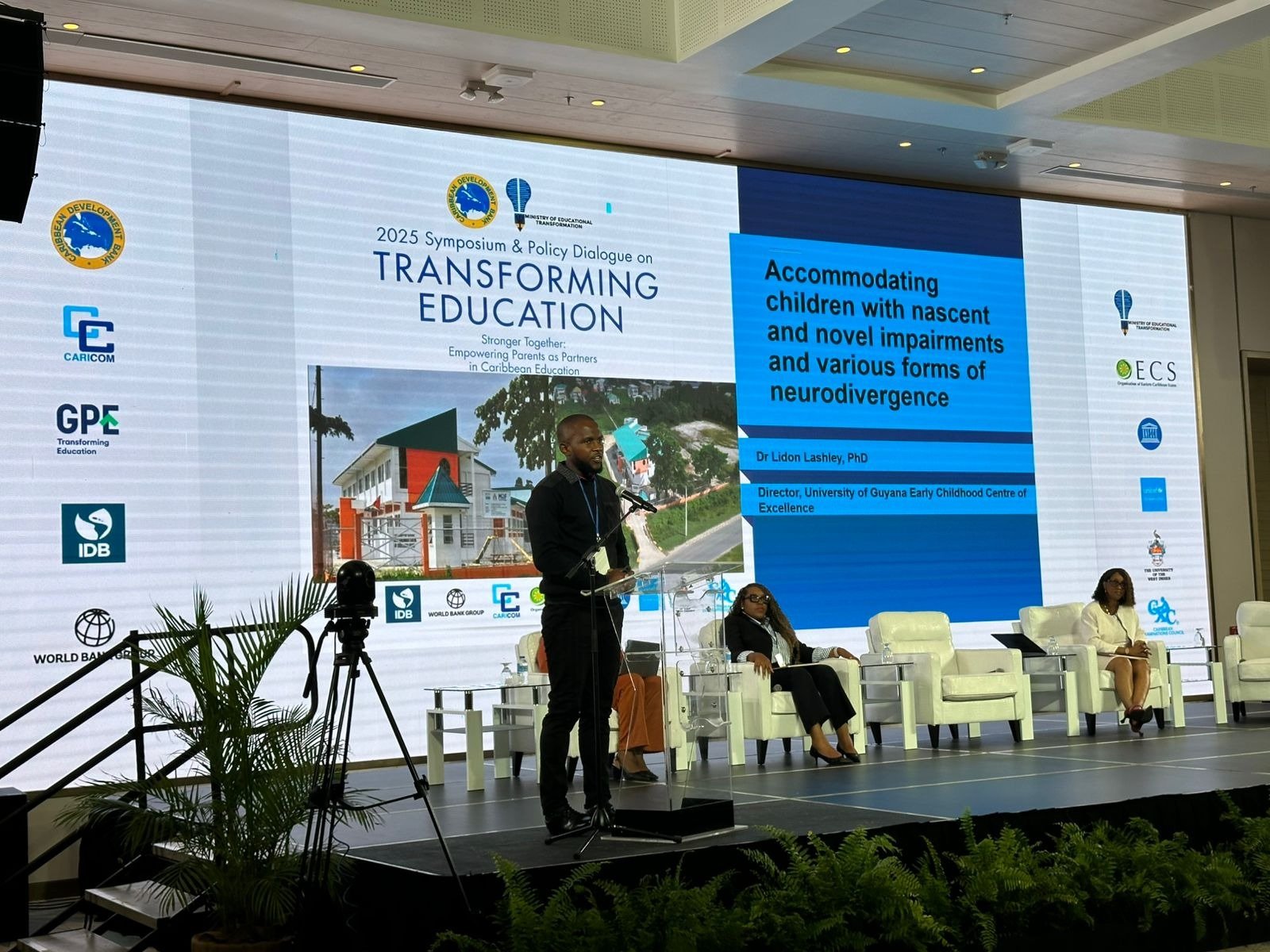
The 2025 Regional Symposium and Policy Dialogue on Transforming Education is currently underway in Barbados, bringing together leaders from across the Caribbean to discuss strategies for reimagining education systems in the region.
The event, hosted by the Caribbean Development Bank (CDB) in collaboration with Barbados’ Ministry of Educational Transformation, runs from September 30 to October 2, and focuses on advancing inclusive, innovative, and resilient approaches to education.
Representing Guyana is Dr. Lidon Lashley, Director of the University of Guyana’s Early Childhood Centre of Excellence, who is among regional stakeholders contributing to critical conversations on the future of education.
Key themes of the symposium include:
Empowering parents as partners in education, ensuring families are actively engaged in their children’s learning.
Breaking barriers for diverse learners, addressing equity and access for students with varying needs.
Strengthening parent-school collaboration, with the aim of fostering stronger learning environments and community ties.
The forum provides a platform for governments, educators, policymakers, and development partners to share best practices and develop actionable policies that can shape education transformation across the Caribbean.
The discussions come at a time when regional governments are seeking to respond to new challenges, including rapid technological change, evolving labour market demands, and persistent inequalities in access to quality education.