Submit News
 About us
 Advertise
 Contact us


 Aug 05, 2026
  4 min read
 Horse racing and tapeball cricket unite in new Guya...
In a landmark convergence of Guyana’s most passionate sporting cultures, horse racing and grassroots cricket have officially joined forces. The organisers of...


09 Aug 2026

In a landmark convergence of Guyana’s most passionate sporting cultures, horse racing and grassroots cricket have officially joined forces. The organisers of...

Any state initiative in the bottled water sector should be structured to strengthen, not compete with or undermine, existing private investment, the...

The family of two-year-old Larissa, who was diagnosed with West syndrome at two months old and experiences up to 100 seizures...

 Jagdeo: No crisis in foreign exchange market as Gov’t moves to expand financing options


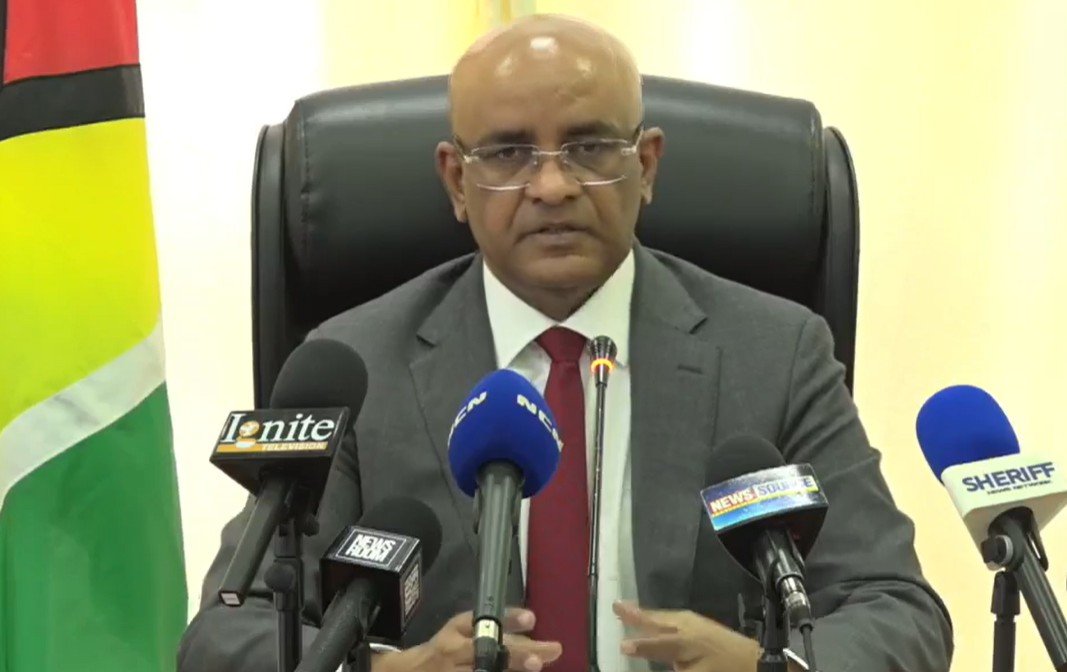
Vice President Dr. Bharrat Jagdeo has reaffirmed the stability of Guyana’s financial sector, insisting that the country has both the revenue streams and institutional capacity to meet rising foreign currency demand, even as large-scale infrastructure projects put additional pressure on the system.
At a press conference on Thursday, Jagdeo dismissed concerns about capital flight and fears of a foreign exchange shortage, stressing that Guyana’s economic outlook points to stronger inflows and reduced demand over time.
“There is no crisis in the foreign currency market,” he declared. “Government has already injected US$1.2 billion into the market this year, and we have the capacity to do significantly more as revenues from the oil and gas sector continue to grow.”
The Vice President revealed that government is moving ahead with plans to establish a Development Bank to improve access to credit for small and medium-sized businesses, particularly women and young entrepreneurs who often face challenges securing loans.
The concept paper for the institution is nearing completion, with provisions expected in next year’s budget to provide seed capital.
The bank is set to become operational before the end of 2026 and will complement reforms within the traditional banking sector, including the introduction of new financial instruments, discounted invoices, and expanded project financing options.
Jagdeo explained that this initiative was shaped by years of consultations across the country, during which many Guyanese expressed frustration over barriers to financing despite having viable business ideas.
He acknowledged that demand for foreign exchange has surged, largely due to the financing of major projects such as the new Demerara River Crossing and the Gas-to-Energy project, both requiring hundreds of millions of US dollars from the domestic banking system and the Treasury.
However, he emphasized that this demand is temporary and capital-intensive rather than recurrent.
Once completed, Guyana’s demand profile will ease.
In particular, the Gas-to-Energy project will reduce reliance on fuel imports and enable domestic production of cooking gas, a shift that could cut annual foreign exchange outflows by as much as US$500 million.
“Today we’re seeing high demand because we’re financing decades of infrastructure in a short period,” Jagdeo said.
“But in the years ahead, not only will this demand decline, our import bill will also fall, while our foreign currency revenues will continue to grow.”
Jagdeo also defended government’s move to tighten oversight of the foreign exchange market, saying loopholes have been exploited by some foreign-owned businesses, including supermarkets and traders, who were accessing foreign currency to meet external obligations without proper banking records.
Under the new measures, larger transactions will require invoices to ensure purchases are tied to legitimate business needs, while local businesses and small-scale users will not be subject to unnecessary requirements.
“This is not about restricting Guyanese access to foreign exchange,” Jagdeo clarified.
“It is about preventing abuse of the system and ensuring that foreign entities operating here pay their fair share of taxes and do not divert our resources to meet external demands.”
He further pointed to ongoing reforms to expand Guyana’s fintech ecosystem in partnership with India, which is expected to reduce transaction costs and broaden access to financial services, especially in hinterland regions. At the same time, the Bank of Guyana will take on a stronger oversight role to enhance the resilience of the sector.
Responding to opposition claims of capital flight, Jagdeo was categorical.
“That is nonsense. If you look at the balance of payments, Guyana is seeing massive capital inflows because returns on investments here are among the highest in the world. This is a country where investors want to bring their money.”
With oil revenues growing, major infrastructure underway, and new measures to expand financing for local businesses, Jagdeo maintained that Guyana is well positioned to manage short-term demand for foreign exchange while maintaining long-term structural stability and economic growth.