Submit News
 About us
 Advertise
 Contact us


 Aug 05, 2026
  4 min read
 Horse racing and tapeball cricket unite in new Guya...
In a landmark convergence of Guyana’s most passionate sporting cultures, horse racing and grassroots cricket have officially joined forces. The organisers of...


08 Aug 2026

In a landmark convergence of Guyana’s most passionate sporting cultures, horse racing and grassroots cricket have officially joined forces. The organisers of...

Any state initiative in the bottled water sector should be structured to strengthen, not compete with or undermine, existing private investment, the...

The family of two-year-old Larissa, who was diagnosed with West syndrome at two months old and experiences up to 100 seizures...

 PPP/C’s development plan goes beyond cash grants — Jagdeo


Clarifies PPP/C campaign financing, outlines development bank, oil storage and data centre plans
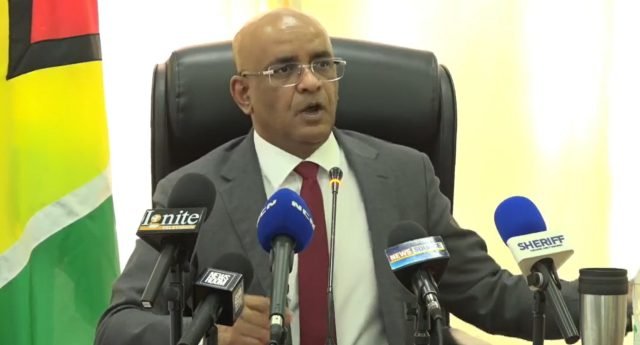
Vice President Dr. Bharrat Jagdeo has dismissed claims that the People’s Progressive Party/Civic (PPP/C) spent as much as $5 billion during the 2025 election campaign, describing the figure as “a blatant falsehood.”
“We didn’t spend much more than what APNU spent, which was around $300 million. To suggest we spent billions is misleading,” Jagdeo told reporters, accusing sections of the media of relying on anonymous sources to spread misinformation.
He added that while incumbency brings advantages, previous governments also enjoyed similar benefits. “When APNU was in office, they used state resources and platforms. So, to claim only the PPP/C benefits from incumbency is disingenuous,” he argued.
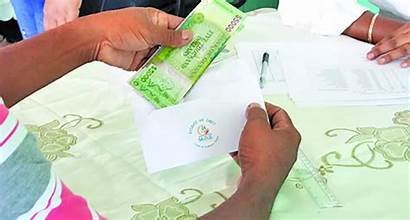
Jagdeo confirmed that government intends to capitalise the new Development Bank with an initial $200 million, introduced in phases.
The institution will provide affordable financing, including interest-free loans, to small businesses and entrepreneurs. Addressing concerns about sustainability, he explained that the model draws from successful global microfinance systems such as the Grameen Bank, which record high repayment rates.
“Yes, there will be some defaults, maybe 10 percent, but with strong financial literacy training, technical support, and marketing advice, most loans will succeed. Funds can then be revolved and expanded with periodic government injections,” he said.
The bank, Jagdeo noted, will be central to the administration’s broader entrepreneurship and job creation strategy, focusing on small business growth as a driver of economic diversification.
On the proposed oil storage facility, Jagdeo revealed that negotiations with private partner Curlew stalled before the elections due to disagreements over terms. Talks will resume, but only if an agreement produces tangible benefits.
“Our goal is to build a tank farm in Guyana to store more fuel, which could reduce procurement costs by up to 35 percent. That’s the real benefit to Guyanese—lower fuel costs. But we won’t rush into any agreement that compromises the country’s long-term interest,” he said, citing lessons from controversial deals signed under the former APNU+AFC government.
Turning to the distribution of oil wealth, Jagdeo rejected the idea that the PPP/C’s approach is centered on handouts.
“Our strategy is not a ‘cash grant model.’ It’s a comprehensive model that invests in education, healthcare, housing, jobs, and ownership opportunities,” he explained.
Among the key elements outlined were free university education, scholarships, digital learning initiatives and AI-driven curriculum improvements in education; expanded health investments nationwide; high-paying job opportunities supported by an investor-friendly climate and tax reforms; and expanded homeownership through reduced construction costs, lower mortgage barriers, and 40,000 new homes.
Direct transfers will continue through pensions, school grants, and targeted support for vulnerable groups.
“The oil resources will not last forever. But if we use them to build an educated, healthy, and employed population, the benefits will outlive the sector,” Jagdeo stated.
 The Vice President also elaborated on Guyana’s digital ambitions, pointing to President Irfaan Ali’s vision of making the country a regional hub through investment in data centres.
“The government’s role is to create the enabling environment—through infrastructure, tax incentives, and skills training. It’s the private sector that will drive these investments. We want to diversify away from oil and position Guyana in the industries of the future,” he said.
He further noted that Guyana is working to build capacity to market its own crude oil, which could eventually generate higher returns than the current system of contracted marketers.
“It’s a complex market, but with technical training and private sector involvement, we will eventually trade our own crude,” Jagdeo said.
Throughout the press conference, Jagdeo underscored that transparency, prudent financial management, and long-term sustainability remain central to the PPP/C’s development agenda.
“We’re not going to sign deals in haste or chase populist policies that undermine our future.
The PPP/C government has a responsibility to ensure that oil resources transform lives today and secure prosperity for the next generation,” he added.