Submit News
 About us
 Advertise
 Contact us


 Aug 05, 2026
  4 min read
 Horse racing and tapeball cricket unite in new Guya...
In a landmark convergence of Guyana’s most passionate sporting cultures, horse racing and grassroots cricket have officially joined forces. The organisers of...


12 Aug 2026

In a landmark convergence of Guyana’s most passionate sporting cultures, horse racing and grassroots cricket have officially joined forces. The organisers of...

Any state initiative in the bottled water sector should be structured to strengthen, not compete with or undermine, existing private investment, the...

The family of two-year-old Larissa, who was diagnosed with West syndrome at two months old and experiences up to 100 seizures...

 Four Caribbean countries formalize CRFM membership during CWA 2025


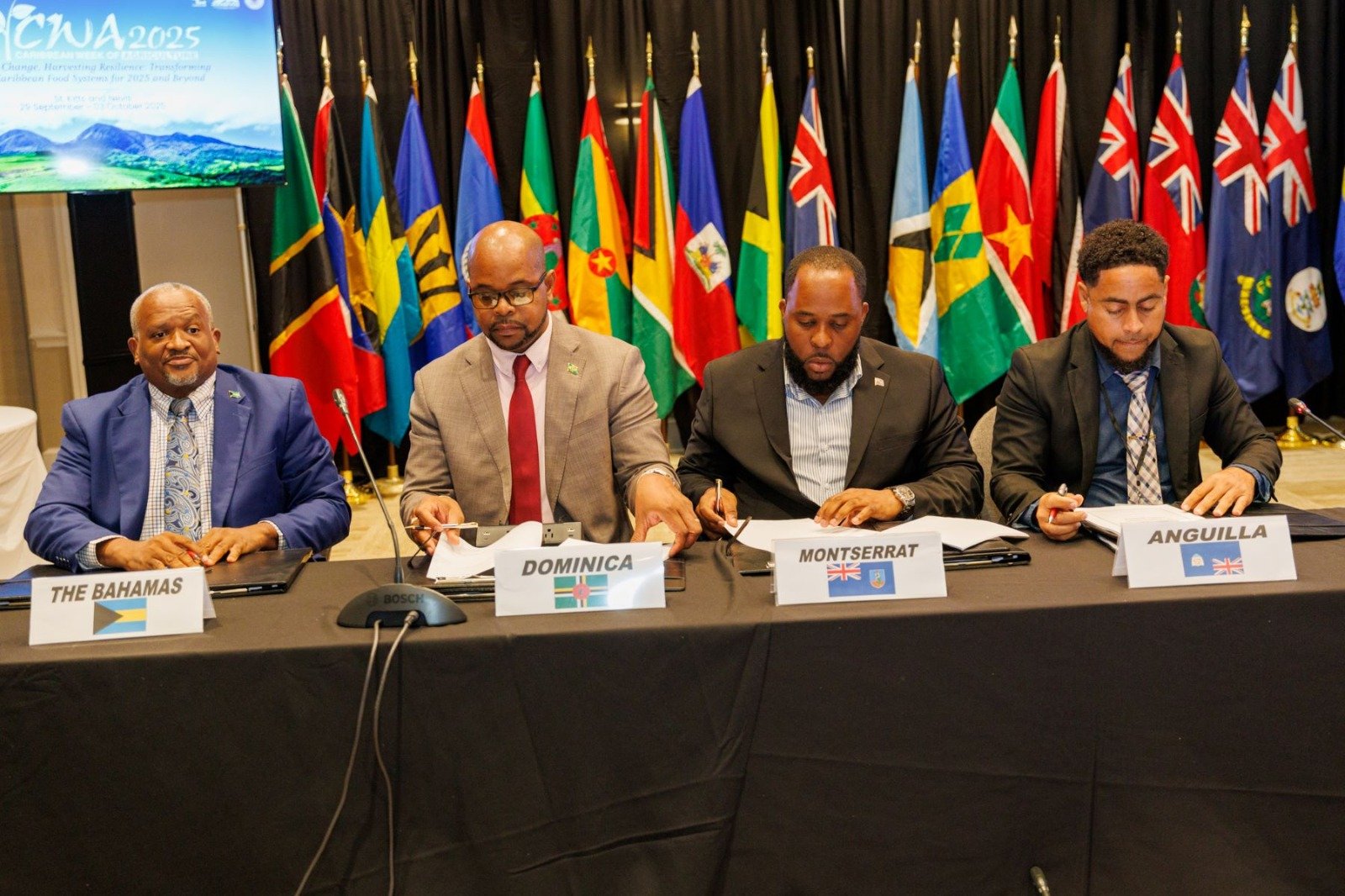
Four Caribbean countries—Anguilla, The Bahamas, Dominica, and Montserrat—have signed the Agreement Establishing the Caribbean Regional Fisheries Mechanism (CRFM), officially formalizing their membership in the 22-year-old intergovernmental CARICOM institution. The signing took place en bloc at the Sixteenth Special Meeting of the CRFM Ministerial Council, held during the recently concluded Caribbean Week of Agriculture (CWA) 2025 in Saint Kitts and Nevis.
The CRFM, inaugurated in Belize City in March 2003, has long provided technical advisory and consultative services to its Member States in the development, management, and conservation of marine and other aquatic resources. It also promotes cooperative arrangements among member countries for the sustainable management of shared or migratory resources.
Dr. Marc Williams, Executive Director of the CRFM Secretariat, welcomed the move, stating, “Currently, there are 17 Member States of the CRFM that have been actively involved in the effective management of the organization. The CRFM prides itself on meeting the needs of its members with the available resources. When attracting resources to support the implementation of our work program and alleviate the financial burden on Member States, the CRFM is frequently asked about its governance framework.”
The heads of delegations who signed the agreement on 30 September 2025 were:
Honourable Kyle Hodge, Minister of Economic Development, Industry, Commerce, Lands, Planning, Water, and Natural Resources, Anguilla;
Mr. Montez Williams, Undersecretary in the Ministry of Agriculture & Marine Resources, The Bahamas;
Honourable Roland Royer, Minister of Agriculture, Fisheries, Blue and Green Economy, Dominica; and
Honourable John Patrick Osborne, Minister of Agriculture, Lands, Housing, Environment, Youth Affairs, and Sports, Montserrat.
Dr. Williams noted that the CRFM has adopted several policies to strengthen governance and operational integrity. These include:
Caribbean Community Common Fisheries Policy (CCCFP), enabling member states to collectively conduct scientific research, assess fish stocks, determine fishing opportunities, and develop fisheries management plans for sustainable resource use;
Personal Data Protection Policy, which defines employee roles and responsibilities in safeguarding personal data and provides procedural guidance for implementation;
Anti-Bribery and Anti-Corruption Policy, offering guidance to staff on recognizing and addressing bribery and corruption; and
Whistleblower Policy, aimed at protecting whistleblowers from retaliation and encouraging a culture of ethical behavior.
Dr. Williams added that the CRFM is making a conscious effort to ensure its initiatives are gender-sensitive and consider the needs of youth and Indigenous peoples.
The CRFM currently has 17 Member States: Anguilla, Antigua and Barbuda, The Bahamas, Barbados, Belize, Dominica, Grenada, Guyana, Haiti, Jamaica, Montserrat, Saint Kitts and Nevis, Saint Lucia, Saint Vincent and the Grenadines, Suriname, Trinidad and Tobago, and the Turks and Caicos Islands.
Since its establishment, the CRFM has worked to ensure the efficient management and sustainable development of marine and aquatic resources, while supporting member states in building regional partnerships and accessing technical expertise for fisheries management.
The formal accession of Anguilla, The Bahamas, Dominica, and Montserrat marks a significant step in consolidating the CRFM’s role as a central institution for fisheries governance and sustainable development in the Caribbean region.