Submit News
 About us
 Advertise
 Contact us


 Aug 05, 2026
  4 min read
 Horse racing and tapeball cricket unite in new Guya...
In a landmark convergence of Guyana’s most passionate sporting cultures, horse racing and grassroots cricket have officially joined forces. The organisers of...


12 Aug 2026

In a landmark convergence of Guyana’s most passionate sporting cultures, horse racing and grassroots cricket have officially joined forces. The organisers of...

Any state initiative in the bottled water sector should be structured to strengthen, not compete with or undermine, existing private investment, the...

The family of two-year-old Larissa, who was diagnosed with West syndrome at two months old and experiences up to 100 seizures...

 LCDS revenues powering energy, climate, and infrastructure projects


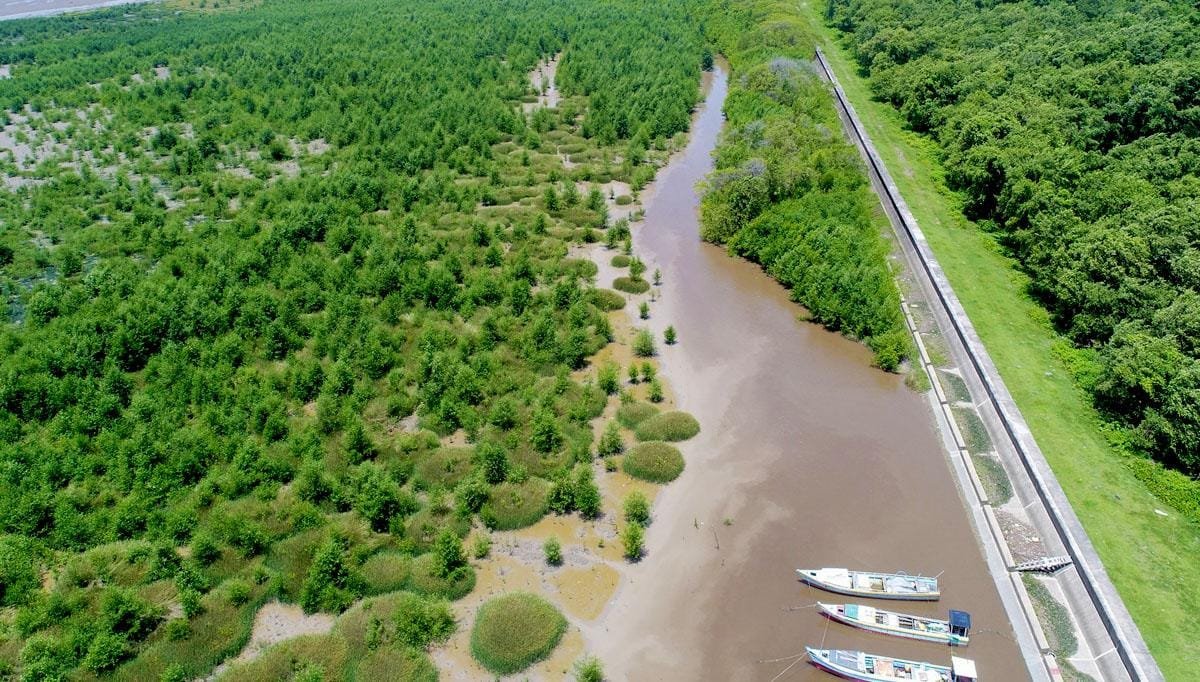
Funding from Guyana’s Low Carbon Development Strategy (LCDS) 2030 is supporting Guyana’s transformation, President Dr. Irfaan Ali said on Tuesday.
He was at the time addressing the first meeting of the LCDS Multi-Stakeholder Steering Committee (MSSC) under his new term.
The meeting brought together government, civil society, and Indigenous representatives to review achievements and outline the roadmap ahead. President Ali emphasised that the LCDS “belongs to all of us” and represents a national partnership connecting the country’s forests, economy, and future.
Since its launch in 2009, Guyana has become the first nation to issue jurisdictional forest carbon credits under the Architecture for REDD+ Transactions framework. Those credits generated about US$400 million in revenue between 2022 and 2025, with a guaranteed 15 percent—over G$12.5 billion—allocated directly to Indigenous villages to fund community-driven projects in more than 240 villages nationwide.
Ali highlighted investments funded by carbon credit revenues, including the Gas-to-Energy project at Wales, which will cut electricity costs by up to half; large-scale solar installations across multiple regions; and Guyana’s largest drainage and irrigation programme to date, upgrading over 1,500 kilometres of canals and 180 pumps to protect farmlands and communities from flooding. He also noted major mangrove restoration and coastal defence projects aimed at strengthening climate resilience.
“These are real investments, not just words—in our land, our people, and our future,” he told the committee, adding that the LCDS is “not theory, it is reality.”
Guyana’s achievements have positioned it as co-chair of the Forest and Climate Leaders’ Partnership alongside the United Kingdom and as host of the new Global Biodiversity Alliance Secretariat in Georgetown. Guyana has also advanced plans to double areas under conservation and establish an international biodiversity research centre.
Ahead of his participation at the World Leaders’ Summit in Belém, Brazil, Ali said Guyana will continue advocating for fair, science-based policies in global climate negotiations.
“Because of our record, we can speak with clarity, integrity, and conviction. Together, we will make the next chapter of the LCDS one of action, keeping Guyana a beacon of hope and leadership for the world,” the president told the participants at the meet.
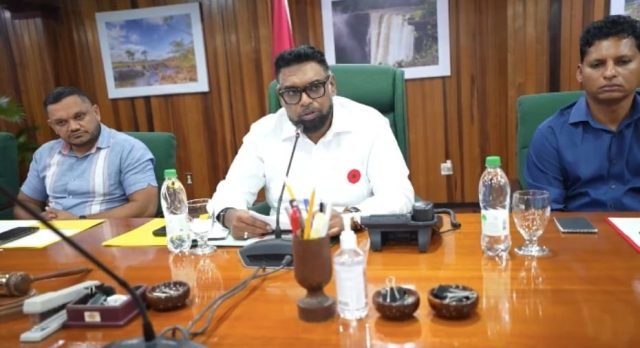
President Ali addresses the meeting with stakeholders on Tuesday