Submit News
 About us
 Advertise
 Contact us


 Aug 05, 2026
  4 min read
 Horse racing and tapeball cricket unite in new Guya...
In a landmark convergence of Guyana’s most passionate sporting cultures, horse racing and grassroots cricket have officially joined forces. The organisers of...


07 Aug 2026

In a landmark convergence of Guyana’s most passionate sporting cultures, horse racing and grassroots cricket have officially joined forces. The organisers of...

Any state initiative in the bottled water sector should be structured to strengthen, not compete with or undermine, existing private investment, the...

The family of two-year-old Larissa, who was diagnosed with West syndrome at two months old and experiences up to 100 seizures...

 Guyana elected to UNESCO Executive Board


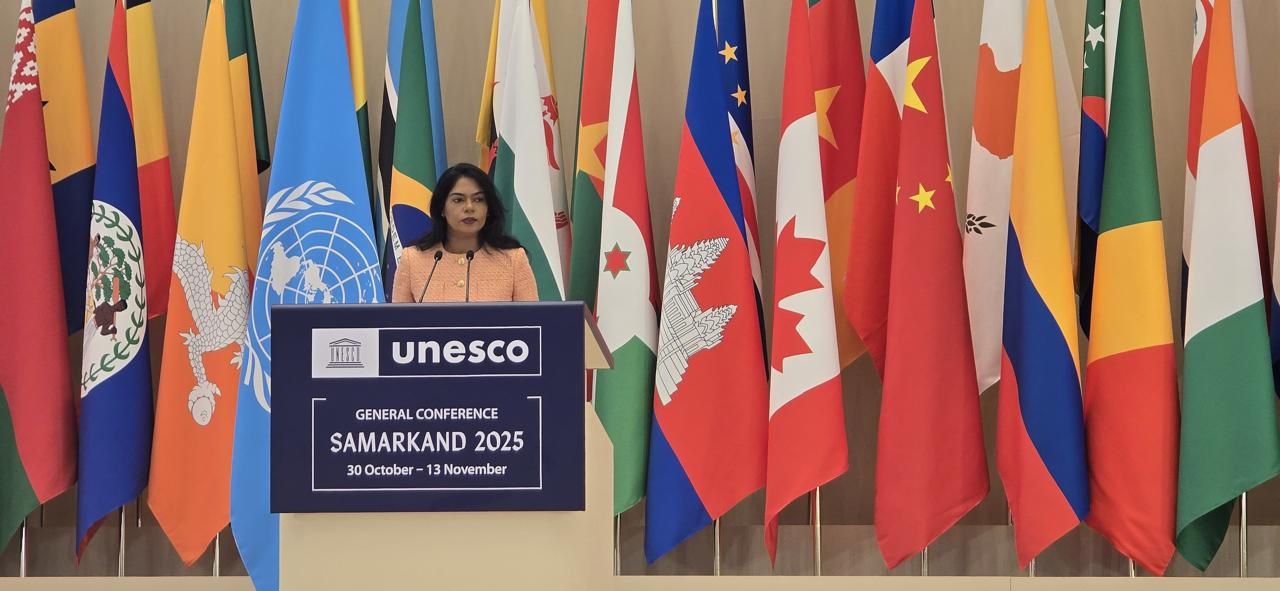
Guyana has been elected to the Executive Board of the United Nations Educational, Scientific and Cultural Organisation (UNESCO), giving it a role in shaping policies and solutions for the organisation’s 194 member states.
The election took place on Friday during UNESCO’s 43rd General Conference in Samarkand, Uzbekistan.
Guyana previously served on the board from 1983 to 1987 and from 1993 to 1997.
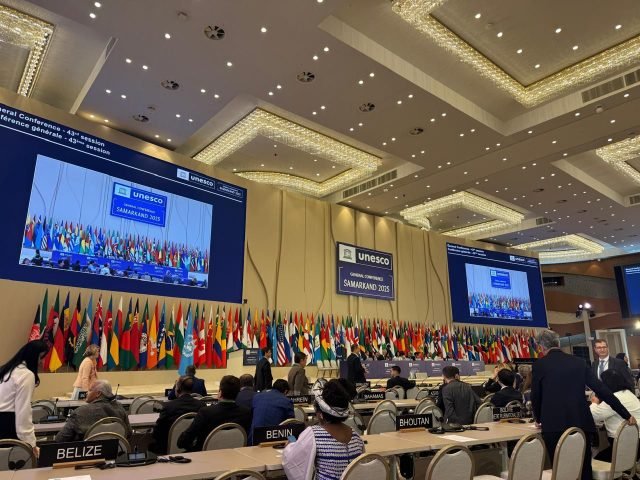
Membership on the Executive Board allows Guyana to influence decisions in education, science, culture, and communication, the Ministry of Education said in a release.
In a speech to the conference, Education Minister Sonia Parag highlighted the government’s focus on academic equality and inclusion. She outlined ongoing and planned initiatives to ensure quality education is accessible to all and emphasised Guyana’s commitment to cultural preservation and fostering creative industries.
The UNESCO Constitution notes that: “Peace based exclusively upon the political and economic arrangements of governments would not be a peace which could secure the unanimous, lasting and sincere support of the peoples of the world, […] peace must therefore be founded, if it is not to fail, upon the intellectual and moral solidarity of mankind.”
President Mohamed Irfaan Ali recently reaffirmed Guyana’s commitment to education, stating: “Guyana remains committed to Sustainable Development Goal number four, and inclusive and quality education for all. Presently, however, there are educational gaps nationally, which can frustrate the objective. We are adopting measures to narrow these gaps, including introducing more in-person tutoring, reforming the national curriculum, extending the use of ICT in education, increasing access to digital and non-digital educational resources, and increasing distance education.”