Submit News
 About us
 Advertise
 Contact us


 Aug 05, 2026
  4 min read
 Horse racing and tapeball cricket unite in new Guya...
In a landmark convergence of Guyana’s most passionate sporting cultures, horse racing and grassroots cricket have officially joined forces. The organisers of...


11 Aug 2026

In a landmark convergence of Guyana’s most passionate sporting cultures, horse racing and grassroots cricket have officially joined forces. The organisers of...

Any state initiative in the bottled water sector should be structured to strengthen, not compete with or undermine, existing private investment, the...

The family of two-year-old Larissa, who was diagnosed with West syndrome at two months old and experiences up to 100 seizures...

 Two containers of locally produced agro-processed goods heading to the Caribbean


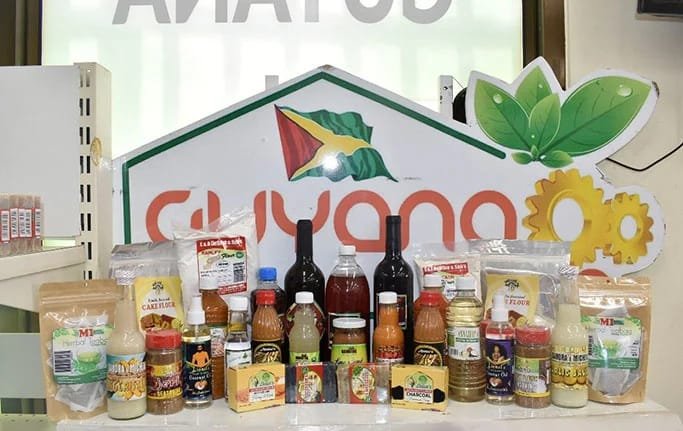
Two containers of locally produced agro-processed goods are being shipped to Caribbean markets, marking a step toward converting farm output into export-led income for households and communities.
President Dr Irfaan Ali, speaking during an in-depth end-of-year conversation with five female journalists and students at the Railway Courtyard on Tuesday, said the shipment reflects an integrated economic and social model aimed at reducing poverty, expanding household wealth and building a diversified, resilient economy.
“You are seeing it at the Christmas markets and across the country: single mothers and small processors improving their products,” President Ali said. “Today, we have just negotiated two containers of agro-processed goods going into the Caribbean.”
He said the exports are a practical outcome of policies designed to transform the country into a competitive, diversified economy that places families, farmers, young people and small businesses at the centre of national growth.
Ali said the agro-processing breakthrough reflects deliberate efforts to incentivise agriculture, empower small producers—particularly women—and link village-level production to regional and global markets.
With the country emerging as a key food supplier to the Caribbean, he said discussions are under way to establish a commercial arm of the Guyana Defence Force that would integrate food production with the CARICOM market.
He cited a recent discussion with the prime minister of Antigua and Barbuda, “where a group of young Antiguans are investing in transport capabilities and are looking to Guyana as a key supplier of food into their domestic system.”
Ali also said the Guyana Development Bank will be used to introduce entrepreneurship education in schools, teaching students how to form consortia and develop bankable ideas from an early age, adding that rapid economic change requires a shift in national mindset.
“Wealth creation is not accidental. It is planned at the national level through policies and programmes and felt at the community level,” he said, warning against attitudes that reduce productivity during a critical phase of development.
On food security, Ali said regional targets have been affected by hurricanes, climate shocks and post-pandemic demand, but noted significant domestic gains. Poultry, livestock, egg, aquaculture, corn and soya production have expanded, with exports to the wider Caribbean expected within two years.
He added that international investors are pursuing opportunities in large-scale livestock and swine production, sugar refining, ethanol, mega farms and hydroponics, reflecting growing confidence in the policy environment.
“Guyana is now seen as a country with a serious policy agenda and a strong ecosystem that supports agriculture and food production,” President Ali said. (DPI)