Submit News
 About us
 Advertise
 Contact us


 Aug 05, 2026
  4 min read
 Horse racing and tapeball cricket unite in new Guya...
In a landmark convergence of Guyana’s most passionate sporting cultures, horse racing and grassroots cricket have officially joined forces. The organisers of...


07 Aug 2026

In a landmark convergence of Guyana’s most passionate sporting cultures, horse racing and grassroots cricket have officially joined forces. The organisers of...

Any state initiative in the bottled water sector should be structured to strengthen, not compete with or undermine, existing private investment, the...

The family of two-year-old Larissa, who was diagnosed with West syndrome at two months old and experiences up to 100 seizures...

 NGSA mock exams finish: focus shifts to final preparations


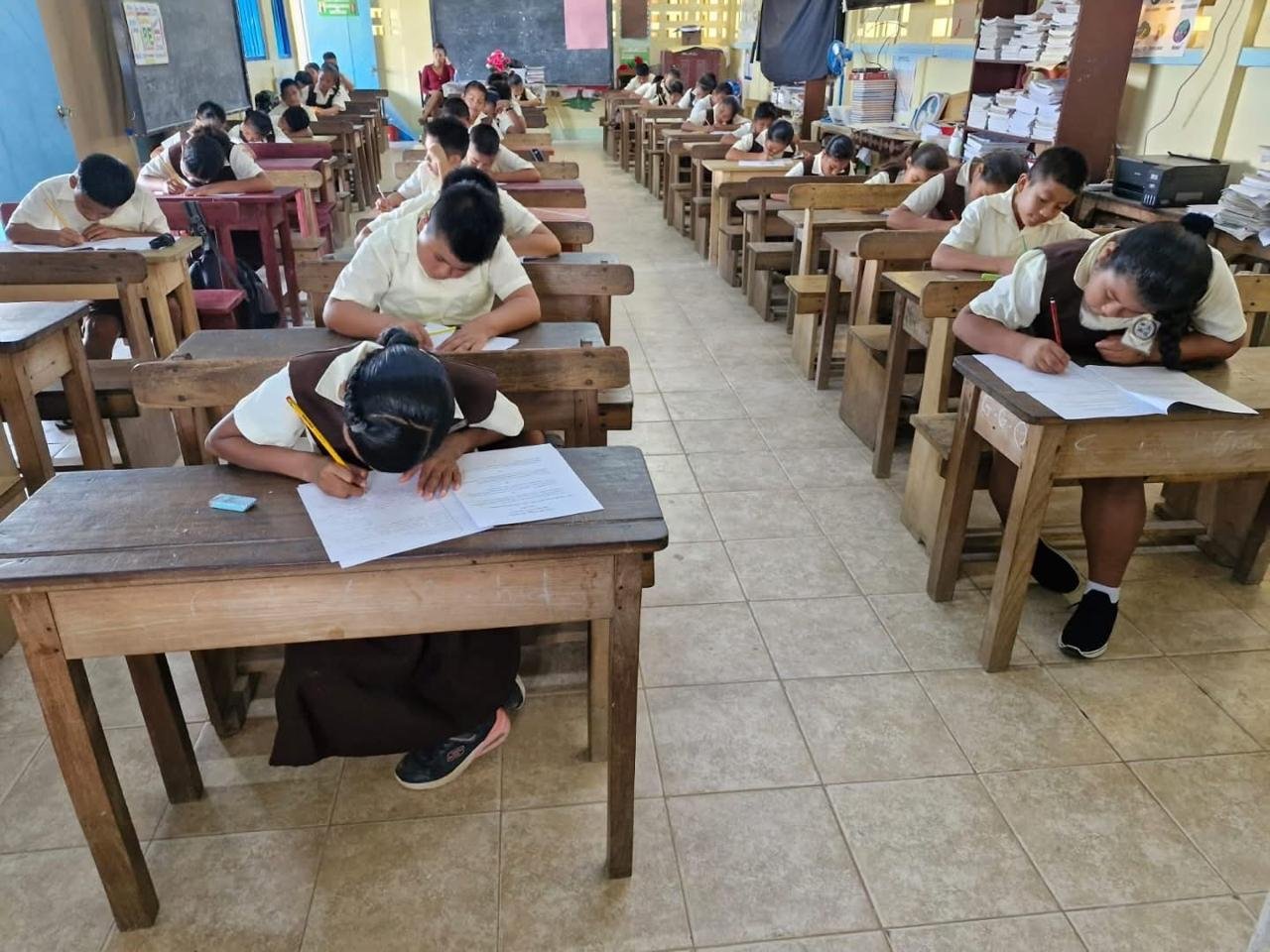
The second round of the National Grade Six Assessment (NGSA) Mock Examinations, which began on Wednesday, will conclude today.
These examinations are essential for preparing students who will be sitting the upcoming NGSA on April 16 and 17, aiming to assess their academic strengths and weaknesses.
On Day One, students wrote English Language Papers I and II, as well as Science Papers I and II. On Day Two, they completed Mathematics and Social Studies Papers I and II.
Results from the first round of mock exams, conducted last December, indicated that Science and Mathematics were areas needing improvement, while Social Studies and English Language were the leading subjects.
Education Minister Priya Manickchand noted that, based on the assessment, certain Science topics required more attention. These included biodegradable and non-biodegradable materials, the movement of the earth, mixtures, separation techniques, circuits, forces of heat, and the phases of the moon.
In Social Studies, areas for improvement included the natural regions of Guyana, the country’s ethnic groups, monuments, landmarks, and transportation.
For Mathematics, the minister highlighted the need for better understanding of fractions, geometry, number concepts, and measurements.
Additionally, in the English Language, areas requiring improvement included comprehension, letter writing, collective nouns, sentence sequencing, subject-verb agreement, and composition.