Submit News
 About us
 Advertise
 Contact us


 Aug 05, 2026
  4 min read
 Horse racing and tapeball cricket unite in new Guya...
In a landmark convergence of Guyana’s most passionate sporting cultures, horse racing and grassroots cricket have officially joined forces. The organisers of...


08 Aug 2026

In a landmark convergence of Guyana’s most passionate sporting cultures, horse racing and grassroots cricket have officially joined forces. The organisers of...

Any state initiative in the bottled water sector should be structured to strengthen, not compete with or undermine, existing private investment, the...

The family of two-year-old Larissa, who was diagnosed with West syndrome at two months old and experiences up to 100 seizures...

 IMF commends Guyana’s efforts to reduce poverty, tackle corruption


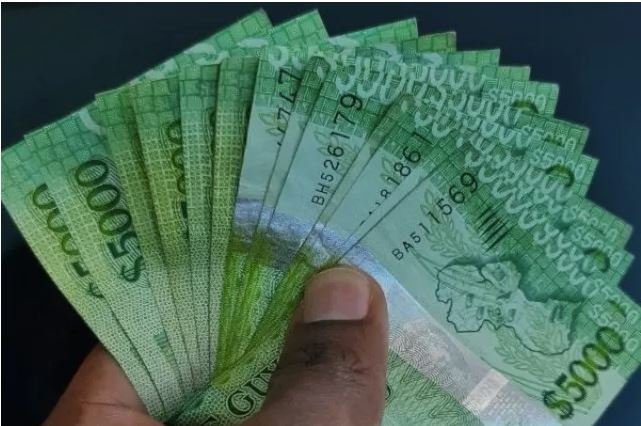
The International Monetary Fund (IMF) has praised the Guyanese government’s social transfer policies implemented in recent years, noting that they have increased disposable income and reduced poverty.
In its latest assessment, the IMF stated that additional targeted transfers, integrated into a medium-term fiscal framework, could further promote inclusive growth and help the country achieve its Sustainable Development Goal (SDG) of eradicating poverty.
The IMF also highlighted Guyana’s progress in strengthening its anti-money laundering and countering the financing of terrorism (AML/CFT) framework in line with international commitments.
The 2024 Mutual Evaluation Report by the Caribbean Financial Action Task Force (CFATF) found that Guyana had significantly improved its understanding of money laundering and terrorism financing risks through multiple risk assessments, including a 2023 sectoral risk assessment on the extractive industries.
Additionally, the IMF recognised the findings of the 2024 Sixth Round of Review of the Mechanism for Follow-up on the Implementation of the Inter-American Convention against Corruption (MESICIC), conducted by the Organisation of American States (OAS).
The report acknowledged Guyana’s progress in anti-corruption efforts, with authorities working to strengthen the Integrity Commission and improve compliance with declaration submissions.
In its assessment, the IMF expressed support for Guyana’s initiatives to foster inclusive growth, economic diversification, and workforce development.
The financial institution emphasised that addressing labour shortages and skill mismatches through training and vocational education is critical to sustaining economic expansion and increasing women’s participation in the workforce.
The IMF also commended the government’s reforms and investments aimed at boosting productivity, enhancing trade connectivity, and promoting export diversification—particularly through high-value-added products in agriculture and manufacturing.
The IMF welcomed ongoing efforts to modernise official statistics, offering continued capacity development support.
It emphasised the need for enhancements in national accounts and price statistics to better capture Guyana’s rapidly evolving economy.
The updated Household Budget Survey, expected to be finalised by 2027, along with regular labour force surveys, is anticipated to play a crucial role in shaping and refining government policies.