Submit News
 About us
 Advertise
 Contact us


 Aug 05, 2026
  4 min read
 Horse racing and tapeball cricket unite in new Guya...
In a landmark convergence of Guyana’s most passionate sporting cultures, horse racing and grassroots cricket have officially joined forces. The organisers of...


09 Aug 2026

In a landmark convergence of Guyana’s most passionate sporting cultures, horse racing and grassroots cricket have officially joined forces. The organisers of...

Any state initiative in the bottled water sector should be structured to strengthen, not compete with or undermine, existing private investment, the...

The family of two-year-old Larissa, who was diagnosed with West syndrome at two months old and experiences up to 100 seizures...

 Guyana to benefit from regional antimicrobial resistance project


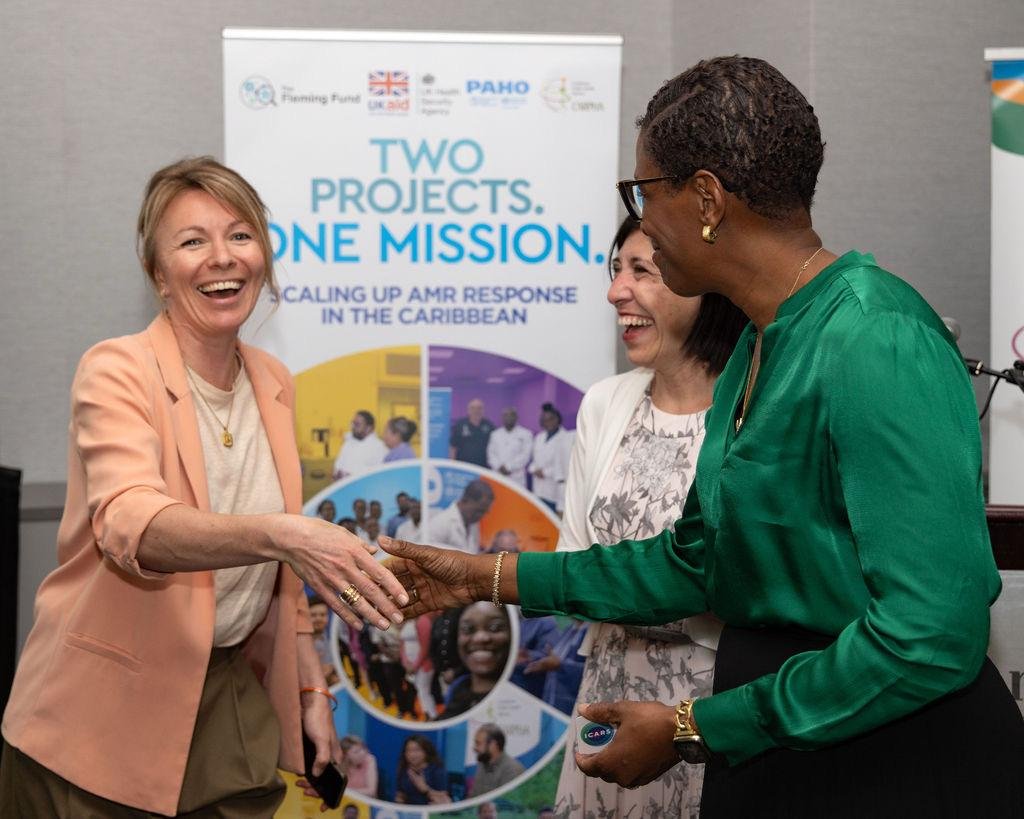
Guyana is one of ten countries that will benefit from the Strengthening Antimicrobial Resistance Response Project in the Caribbean, aimed at bolstering the region’s fight against the global crisis of antimicrobial resistance (AMR).
According to a release, AMR occurs when microbes evolve to resist treatment, making infections more difficult to cure. In 2019, AMR was responsible for 1.27 million deaths and contributed to nearly five million more—surpassing HIV/AIDS and malaria.
The project, led by the Pan American Health Organisation (PAHO), is designed to enhance microbiology laboratories in 10 countries: Belize, Dominica, Grenada, Guyana, Haiti, Jamaica, Saint Lucia, Saint Vincent and the Grenadines, Suriname, and Montserrat.
Launched on Monday under the United Kingdom (UK) Government’s Fleming Fund, the project is jointly implemented by the Caribbean Public Health Agency (CARPHA), PAHO, and the UK Health Security Agency (UKHSA).
Caribbean small island developing states face additional risks due to limited laboratory infrastructure, transport delays, and unequal access to antibiotics.
The release noted that the project will also enhance capacity at the Best-dos-Santos Public Health Laboratory in Barbados.
The Caribbean Antimicrobial Resistance Alliance (CARA) is another initiative launched in partnership between UKHSA and CARPHA, forming part of CARPHA’s wider integrated AMR programme aimed at strengthening the region’s capacity to detect and respond to antimicrobial resistance.
Through this initiative, CARPHA is enhancing its regional laboratory network, expanding diagnostic capabilities, and improving the collection and use of AMR data.
The project will support member states by expanding reference laboratory services in Trinidad and Tobago, Jamaica, and Saint Lucia, while establishing a digital, region-wide surveillance platform, the release said.
Speaking at the launch, Professor Dame Sally Davies, UK Special Envoy on Antimicrobial Resistance, noted that AMR is a global emergency that demands urgent action.
“The collaboration between UKHSA and CARPHA, supported by the Fleming Fund, is a powerful testament to our shared commitment to tackling this crisis head-on. By enhancing lab capabilities, improving surveillance, and building workforce expertise, we are taking decisive steps to protect the health of Caribbean communities and beyond. Together, we can make a lasting impact in the fight against AMR,” she stated.
Minister of State for Public Health and Prevention at the UK Department of Health and Social Care, Ashley Dalton, emphasised that antimicrobial resistance is one of the most serious and complex health challenges facing the world.
Meanwhile, Dr Natalie Wright, Head of the UK Overseas Territories Programme and CARA project lead at UKHSA, highlighted that sustained action is required to curb inappropriate use of antibiotics, the main driver of AMR.
“Through this programme, our goal is to build sustainable systems that promote data sharing, support clinical decision-making, and create lasting resilience to the threat of AMR,” she explained.
Delivering remarks on behalf of Barbados Prime Minister Mia Amor Mottley, who chairs the Global Leaders Group on Antimicrobial Resistance, Chief Medical Officer of Barbados, Dr Kenneth George, stated that Barbados has made significant strides in AMR surveillance and is working towards full reporting to the Quadripartite Global Integrated System for the surveillance of antimicrobial resistance and antimicrobial use.